The Justice and Advocacy Committee of the Lehigh Valley Conference of Churches began planning a creative learning event about the growing Economic Divide in America long before we’d heard of #OccupyWallStreet, Occupy Together, or Occupy Allentown. The Occupy movement affirms the the urgency of these issues for people of faith, and for all people. Please join us at Zion’s Liberty Bell Church (also known as Zion’s Reformed UCC) at 620 W. Hamilton Street in Allentown on Saturday, October 29th. Everything you need to know about workshop options, presenters, schedules, and registration is here.
If you were into civics as a kid, “gerrymandering” is one of the words you learned in 10th grade and still remember. You probably even remember the practice’s namesake, Elbridge Gerry, and that he endorsed the creation of oddly-shaped voting districts that favored his political party in the early days of the Republic. The practice produced a cartographic chimera of sorts, the so-called Gerry-mander, and the practical side American political science began in earnest. For all the time they must have spent outside, you’d think that early 19-century Americans would have known that salamanders don’t have wings but do have arms.
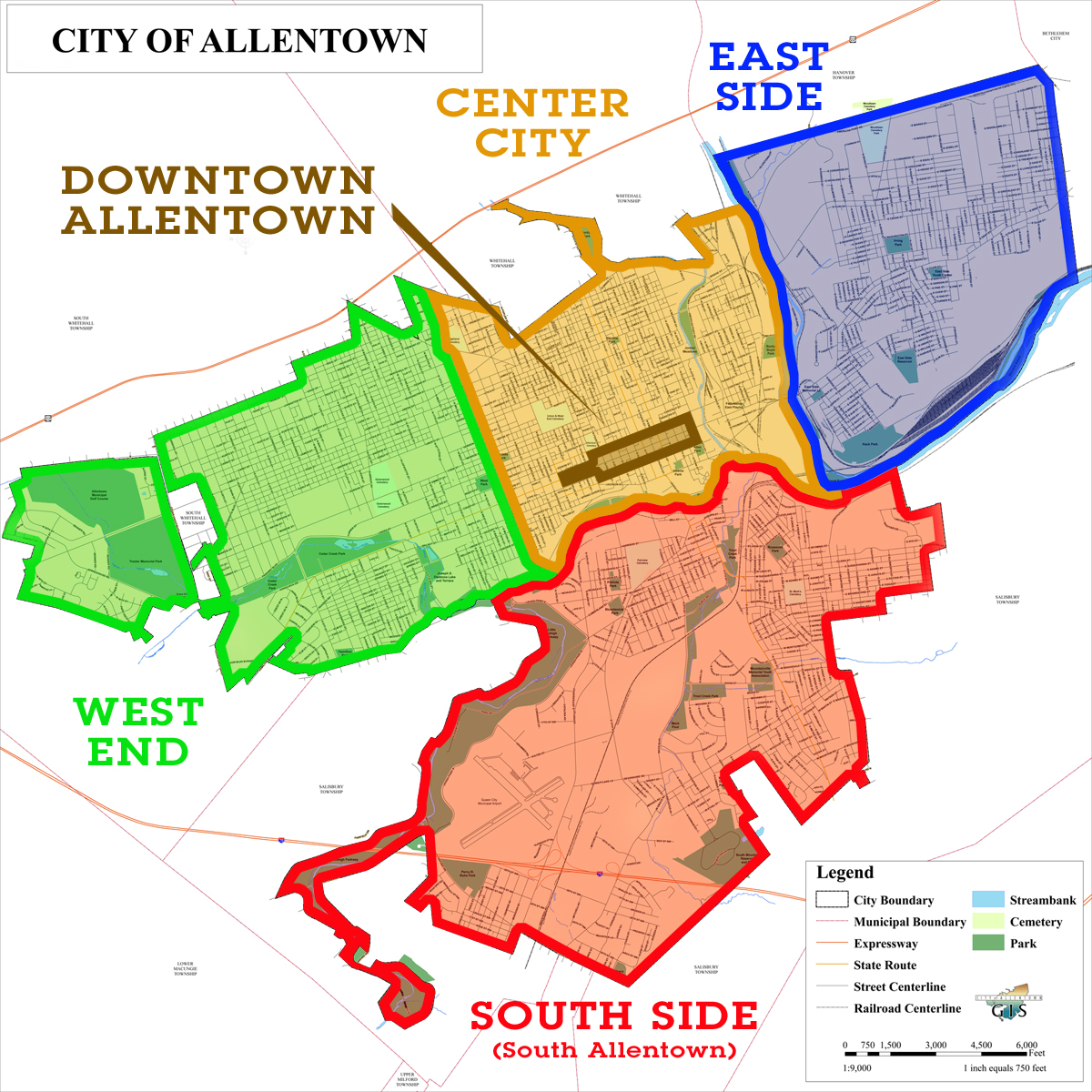
Today, I came across a map of Allentown that Damien Brown edited to show the city’s different sections (East Side, Center City, Downtown, South Side/South Allentown, and West End):
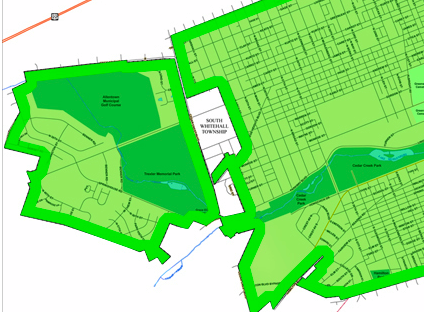
Now, if you live in Allentown, you know that a small pocket of South Whitehall Township (those white polygons) cuts into the West End on the east side of Cedar Crest Boulevard from Washington Street to Parkway. A closer look:
What’s the story here? What political machinations are afoot??? Just the long-term visioneering of Allentown industrialist Gen. Harry C. Trexler, patron of the Allentown Parks System, the Golf Course, the Trexler Nature Preserve and lots of other things we take granted. The space that is now Trexler Park was, before his death, a family summer estate in South Whitehall Township. This land and the land immediately around it (including the Golf Course) only became part of the city because of Trexler’s work and generosity.
Longtime Lehigh Valley residents know most of this already. What I didn’t know: Trexler is probably also responsible for preserving the Lehigh Valley’s home-rule culture. His mistrust of Philadelphian power (antagonistic as it was to the Lehigh Valley’s Pennsylvania Germans) led him to champion the development of a regionally-based economy. It makes me stop and think: even as we recall Allentown’s decline from unique, mid-sized, industrial and commercial base of economic power to a city searching for a new identity and a sustainable economy of the future, if not for Trexler, the plus side of the Lehigh Valley’s history might not have happened at all.
In pioneers like Trexler and, later, the Rodale family, the Lehigh Valley has fine models for conservation and sustainable business. Even though the national economy is groaning, it is also greening. 100 years ago, Trexler and others converted a vacant, run-down city lot into what we know today as West Park. Leaders from all aspects of Allentown’s public life need to keep taking these cues and continue embracing the opportunities financial trouble brings. If we need to build, we must (and can) build sustainably. If we need to tear down, we can do it beautifully. I imagine a city that is increasingly walkable in all quarters, and one where junked lots and vacant parking lots become a patchwork of parks and public spaces.
No one knows how long the current economic crisis will continue. What we do know is this: the days of retail excess are over, and rising generations want walkable, bikable, beautiful urban spaces in which to live and work and spend. We want sustainable, hyper-local options, we want good news for the city and we want to be part of that transition.
On a long enough timeline, chronically closed spaces will green themselves, but cities across the country are starting from scratch with new sustainable ethics and visions. Thankfully, we don’t have to start from square one. If stakeholders are committed, our region, led by our cities, can be a national example of the new economy even it was once a beacon of the old. And unlike silk or steel or cement or retail, sustainability is a business for all times and all seasons.
Two people came by today via searching Allentown Fair 1992 Boyz II Men.
In case you don’t know your Lehigh County Agricultural Society History (for shame!), this was a the concert that was headlined by MC Hammer. My awesome older cousin and I wanted to go. Opening for BIIM was TLC (“who?” I said at the time).
I wasn’t allowed to go. Thanks for the reminder, Google. Jerks.
Friends, I did not make it to Egypt Star yesterday, but I did succeed in my primary goal, which was to enjoy a genuine Lehigh Valley Fastnacht (plain) at Mary Ann Donut Kitchen. Like most people in Allentown, I love Mary Ann Donuts. They are the best and most authentic of all Allentown pastries. As Linus Van Pelt might say, they are sincere.
While Mary Ann usually has a huge variety of freshly-made donuts, bagels, and crullers on hand, the only offerings yesterday were three varieties of the traditional Pennsylvania German pre-Lenten pastry. Reports from early in the morning had Fastnacht-seekers lining out the door for over two hours. By the time of my visit around 1 PM, the place was still full and still filling.
My Fastnacht was excellent, by the way. An added bonus: Mary Ann’s always delightful staff were wearing special shirts that read:
Maybe you call it Fat Tuesday or Shrove Tuesday or Mardi Gras. In these parts, friend, it’s Fastnacht Day. My pledge to you, dear reader, is that I will not repeat last year’s poor showing. Not only will I enjoy fastnachts (yes, plural) today, but I will be enjoying them from Mary Ann Donut Kitchen. Holler if you know what’s up. I may also venture to Egypt Star Bakery so as to get the most fat for my Tuesday.
This is a big deal. As I said last year, we used to even get faschnats in elementary school. Enjoy yours early and often. Then get your butt to church on Wednesday for the imposition of ashes.
I never used to take part in that particular Lenten tradition, but I did it last year from a place of feeling like I really needed to do something different, even if only provisional, to connect with the Holy.
Image via Wikipedia
I’ve been on a long, interesting journey since then. I’m not ashamed to drop the qualifier “provisional” from my status as Christian, so long as epistemological humility isn’t breached. But I’m still more apt to describe my faith in Conan O’Brien terms than, say, the limiting language you might hear in some Christian quarters. Even so, even so, I find myself much more interested in the mystical traditions than ever before, much more at home around ritual and structure so long as I can approach them, too, from a place of humility and from a recognition that God is bigger than the things we do and that when God meets us in those things, it’s because God is God, not because we’ve done something cosmically essential. But it’s also true that our drive to meet God in places carved out by tradition echos something cosmically essential: an understanding that we want and need the mystical, the holy; a hope the God will meet us wherever it is we seek to find.
For me, the power of Christian ritual has absolutely nothing to do with it being set down by patriarchs with apostolic authority or some other contrived historiography that super-values the existential (and perhaps compulsive) needs of long-dead saints. For me, our rituals, like our stories, are opportunities to embrace the basic Christian claim: the in-breaking of God at every turn, the furious longing on God’s part for time and eternity with us.
Oh boy. This post was supposed to be about donuts. More to come on Huffington, I think.
 The Justice and Advocacy Committee of the Lehigh Valley Conference of Churches began planning a creative learning event about the growing Economic Divide in America long before we’d heard of #OccupyWallStreet, Occupy Together, or Occupy Allentown. The Occupy movement affirms the the urgency of these issues for people of faith, and for all people. Please join us at Zion’s Liberty Bell Church (also known as Zion’s Reformed UCC) at 620 W. Hamilton Street in Allentown on Saturday, October 29th. Everything you need to know about workshop options, presenters, schedules, and registration is here.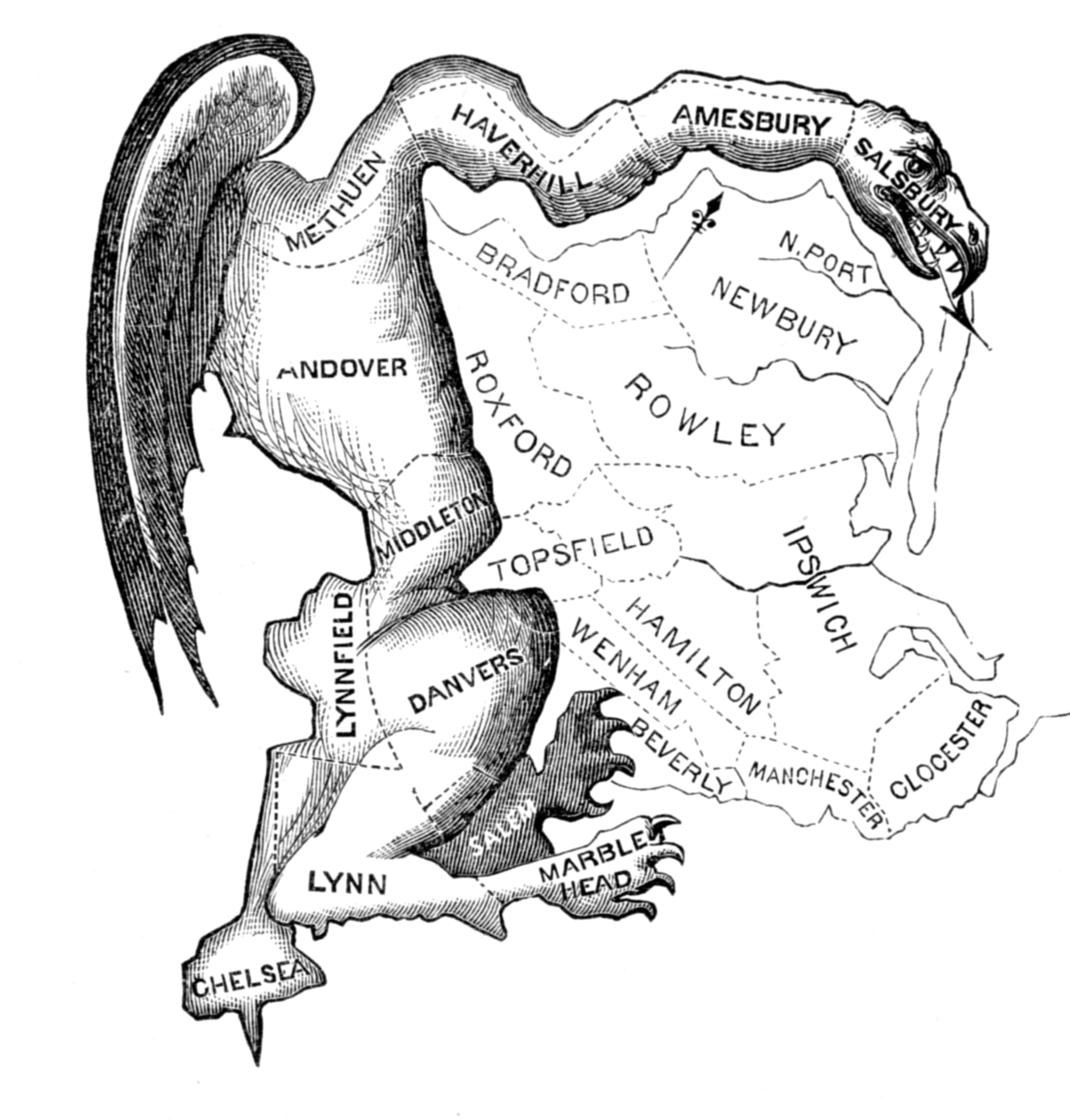


 Chris Cocca