Quatrain.Fish publishes very short poetry of four lines or less. Here’s their Editor’s Note:
I know for myself, when I set to write a short poem, I tend to end up with about six lines. Those of course, won’t be welcome here at Quatrain.Fish. Most poetry of four lines or less (fewer, if you insist) isn’t a poem at all, but part of a poem or an ill-formed thought. Yet if, as Poe claimed, long poems aren’t poems at all, then perhaps the most poetical of poems is the shortest of poems.
Perhaps.
True or not, a perfectly crafted, tiny poem is like a sharp knife or a sex-laden wink, an empty elevator shaft or the perfect vista bursting through fog: perfectly captured images and emotions that can creep into our lives and never leave. We hope Quatrain.Fish publishes one or two or three or thirty that can be that for you.
A piece of mine was just accepted for publication. I look forward to sharing it soon.
In the meantime, check out Quatrain.Fish. They are permanently closing to new submissions in December, so get your short work to them soon.
Over the years, many people have ended up at this blog because of some posts on dirty realism. A definition of the style from Wikipedia, circa 2009:
“Dirty Realism is a North American literary movement born in the 1970s-80s in which the narrative is stripped down to its fundamental features.
This movement is a derivation from minimalism. As minimalism, dirty realism is characterized by an economy with words and a focus on surface description. Authors working within the genre tend to eschew adverbs and prefer allowing context to dictate meaning. The characters in minimalist stories and novels tend to be unexceptional.
Dirty realism authors include the movement “godfather” Charles Bukowski (1920-1994), as well as the short story writers Raymond Carver (1938-1988), Tobias Wolff (1945), Richard Ford (1944), Frederick Barthelme, and Pedro Juan Gutiérrez (1950).”
My favorite line from this description is: “The characters in minimalist stories and novels tend to be unexceptional.”
When I was thinking about this a dozen years ago, flash fiction was not as well-established across the literary internet as it is today. The flash fiction I was writing was almost exclusively in the dirty realist voice. In my way of thinking, the stories weren’t really about what happens in them as much as what the actions (or lack of) and the urgency of shorter forms evoke. Compulsions of style and length dovetailed by default. For me, realism was (and maybe is) the natural voice of very short fiction, and very short fiction is a natural expression of the realist voice.
These days, I think there’s much more to it. But there’s still a kernel of truth to these connections, at least for me and for my shorter work. The trick is not to be too clever or too pithy, and sometimes that’s much harder than it sounds.
Tom Spanbauer calls cliched words and imagery received text. I know this because of a great essay Chuck Palahniuk wrote about Amy Hempel and minimalism. I try to be very aware of received text (including dying metaphors) in my work and when I’m asked to read or edit others’. Sometimes this obsession spills over into daily life.
One time on a walk, my dog uncharacteristically opted for a fire hydrant. I said, “Come on, boy, you’re better than that.” He rolled his eyes and told me to get the bag ready.
The moral of the story: no one likes cliches or literary snobs. Gently excise received text from the work and thoughts of those you love…
A few days ago, I wrote a poem partly quoting James Cone. His work means a lot to me.
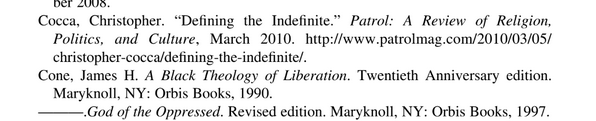
Today, I found out that an essay I wrote ten years ago is quoted in a book about music, theology, and justice. In the bibliography, I’m cited next to Cone.
I know it’s because of how the alphabet works, but I’m incredibly humbled. James Cone is brilliant. I’m, at best, a broken clock. A newly encouraged one. James Cone still inspires, and the long march isn’t done.
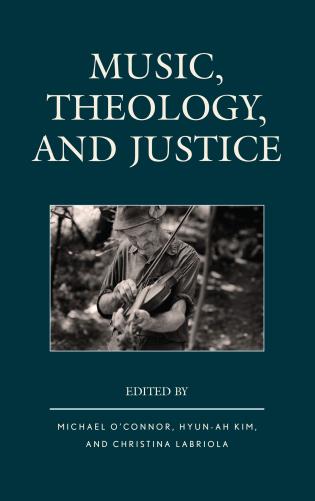
Here’s the book, in the publisher’s words:
Music, Theology, and Justice
Edited by Michael O’Connor; Hyun-Ah Kim and Christina Labriola – Contributions by Awet Iassu Andemicael; C. Michael Hawn; Maeve Louise Heaney; Chelsea Hodge; Michael J. Iafrate; Ella Johnson; Hyun-Ah Kim; Christina Labriola; Ann Loades; Bruce T. Morrill; Michael O’Connor; Michael Taylor Ross; Don E. Saliers; Jeremy E. Scarbrough and Jesse Smith
Music does not make itself. It is made by people: professionals and amateurs, singers and instrumentalists, composers and publishers, performers and audiences, entrepreneurs and consumers. In turn, making music shapes those who make it—spiritually, emotionally, physically, mentally, socially, politically, economically—for good or ill, harming and healing. This volume considers the social practice of music from a Christian point of view. Using a variety of methodological perspectives, the essays explore the ethical and doctrinal implications of music-making. The reflections are grouped according to the traditional threefold ministry of Christ: prophet, priest, and shepherd: the prophetic role of music, as a means of articulating protest against injustice, offering consolation, and embodying a harmonious order; the pastoral role of music: creating and sustaining community, building peace, fostering harmony with the whole of creation; and the priestly role of music: in service of reconciliation and restoration, for individuals and communities, offering prayers of praise and intercession to God.
Using music in priestly, prophetic, and pastoral ways, Christians pray for and rehearse the coming of God’s kingdom—whether in formal worship, social protest, concert performance, interfaith sharing, or peacebuilding. Whereas temperance was of prime importance in relation to the ethics of music from antiquity to the early modern period, justice has become central to contemporary debates. This book seeks to contribute to those debates by means of Christian theological reflection on a wide range of musics: including monastic chant, death metal, protest songs, psalms and worship music, punk rock, musical drama, interfaith choral singing, Sting, and Daft Punk.
You’ve finished that short story. You’re sure it’s ready. You send it off into the world. It comes back void.
You let it sit. You read, you write. You question your life choices. You pull the story down and edit with new eyes. You start to submit. You are developing thick skin.
You wash and rinse. Repeat.
I don’t know of any shortcuts. I asked the #WritingCommunity folks on Twitter how many rejections they have in their Submittable accounts. The answer was almost always hundreds. You have to keep going. You have to edit. You have to re-see your own work. You have to keep submitting.
We all know the folk definition of insanity, but we keep going.
Why?
Well, for one thing, it’s not like we can stop. You know what I mean.
But we can, as people say, fail better.
We can read more. We can do a better job reading what’s already out there. Not to copy, not to steal, but to be better writers. To be more patient, empathetic. To cut ourselves some slack.
Most journals say to read an issue or two before submitting to get a feeling for who they are and what they publish. The idea isn’t for you to reverse engineer your work. It’s to help you see if you’re a fit, which, among other things, can damper disappointment. Of course, if you really don’t like the things a given journal tends to publish, you’ll have to decide if it makes sense for you to submit there. Editors change, tastes change, and maybe you’re doing something novel. But go into the submissions process knowing what to expect (hundred, maybe thousands, of rejections) and realizing that there are many brilliant, brilliant writers working just as hard as you are.
With that said, The Summerset Review offers a recommended reading list that not only helps writers know if their work might be a fit, but also curates the craft in general. Reading deeply and widely always helps.
In the time it took me to write this, I got a new rejection. It won’t be the last. And that’s okay.
We could do easier things, but that’s not really who we are.
From the University of Massachusetts Amherst, in collaboration with the School of Earth and Sustainability, the College of Humanities and Fine Arts, and the UMass Libraries comes Paperbark Literary Magazine. It has a very clean and modern-looking website and a compelling mission:
“Paperbark Literary Magazine is an expression of the intellectual and artistic currents working to shape collective consciousness about issues of sustainability in the information age. Born in New England, Paperbark draws on the unique heritage and culture of the region to support and stimulate creative engagement with progressive ideas. Rooted in themes of stewardship, innovation, and possibility, Paperbark’s content is motivated by a desire to trace the connections between science, culture, and sustainability. Paperbark lives at the confluence of imagination and critical inquiry, and is an integral tool for the promotion of sustainability initiatives on the University of Massachusetts campus. The magazine strives to illuminate the impacts of human society while nurturing our intrinsic capacity to catalyze positive change.”
 Chris Cocca