By the way: that post where I asked people still plugged into the WordPress ecosystem to leave a comment? Nah. 850 subscribers, one like, zero engagement. My suspicion about the real number of subscribers is probably true. I also feel like maybe WordPress is dead?
From a letter Jack Kerouac wrote to Donald Allen in 1958, here’s the wonderful “Belief & Technique For Modern Prose: List of Essentials.”
Scribbled secret notebooks, and wild typewritten pages, for yr own joy
Submissive to everything, open, listening
Try never get drunk outside yr own house
Be in love with yr life
Something that you feel will find its own form
Be crazy dumbsaint of the mind
Blow as deep as you want to blow
Write what you want bottomless from bottom of the mind
The unspeakable visions of the individual
No time for poetry but exactly what is
Visionary tics shivering in the chest
In tranced fixation dreaming upon object before you
Remove literary, grammatical and syntactical inhibition
Like Proust be an old teahead of time
Telling the true story of the world in interior monolog
The jewel centre of interest is the eye within the eye
Write in recollection and amazement for yourself
Work from pithy middle eye out, swimming in language sea
Accept loss forever
Believe in the holy contour of life
Struggle to sketch the flow that already exists intact in mind
Don’t think of words when you stop but to see picture better
Keep track of every day the date emblazoned in yr morning
No fear or shame in the dignity of yr experience, language & knowledge
Write for the world to read and see yr exact pictures of it
Bookmovie is the movie in words, the visual American form
In praise of Character in the Bleak inhuman Loneliness
Composing wild, undisciplined, pure, coming in from under, crazier the better
You’re a Genius all the time
Writer-Director of Earthly movies Sponsored & Angeled in Heaven
As Ever,
Jack
Jack Kerouac, “Belief & Technique For Modern Prose: List of Essentials,” letter to Donald Allen (1958), published in Heaven & Other Poems, Grey Fox Press, 1958, 1977, 1983. Reprinted in Evergreen Review, Spring 1959.
A free-write I did a few years ago inspired by these:
Be crazy dumbsaint of the mind. Kerouac’s Beliefs and Technique for Modern Prose. Be crazy dumbsaint of mind. Crazy dumb. Crazy saint. Be crazy dumbsaint of mind. Dumbwaiter. Dumbass. Crazy dumbsaint of mind. Bodymind. Be crazy dumbsaint of mind. Remember the holy contours of life, keep them holy, you are a genius, you are a genius, you are a genius all of the time. Remember the dumbsaint of mind, keep it holy, remember the holy contours of life. We part the sea, part the sea, part of us is sea; the road, the road, the road, we are ships on waves, wedging towards horizons, coming through in waves, in waves; we come through and we rise. Be crazy dumbsaint of mind.
I’ve been on WordPress for a long time. According to my dashboard, this site has about 850 subscribers. Are you one of them?
WordPress is great at many things, but helping creators understand their audience isn’t really one of them. I’m hoping you can help me fill in some gaps. I’m also hoping you’ll consider following me on Substack (chriscocca.substack.com).
Some of you are regular readers. Some of you are new. Some might have subscribed years ago and forgotten. Some might just get an email once in a while and skim it. Some are certainly bots. Some are people who liked a particular post but didn’t find much else of value.
The truth is, with a site as old as this one, a good half of the subscriptions are probably tied to email addresses no longer in use. A good many are also through the WordPress Reader, which is great.
However you connected, thank you.
To help me create a more engaging experience, would you do me a favor? Could you comment below with a few quick thoughts?
How did you find this site?
What kinds of things interest you most?
About My Work and Where It Fits
Another reason I’m asking is that my work has gradually spread across a few different places.
If you’ve been following this site for a while, you might know that my academic and professional training are in theology (MDiv from Yale Divinity School) and creative writing (MFA from The New School). I publish poems, creative nonfiction, and the occasional piece of fiction in literary journals. I’m also working on longer projects—poetry manuscripts, essays, a novel, and a growing collection of short stories. As I’ve focused more on that kind of work, this site has become less of a blog (remember blogs?) and more of a repository, a bulletin board for current thoughts, and a place to share updates about things I’ve been publishing.
A few years ago, I started dabbling on Substack. Over the last month, I’ve been interacting on that platform regularly. It started as a newsletter platform for writers, but now also includes an ecosystem for short Notes (basically, tweets). It combines a lot of what I liked about Twitter and a lot of what is good about WordPress. It is, by design, a more natural place for those who spend lots of time writing.
Substack is quickly becoming a place where people write more deeply (newsletters/articles) and more informally (Notes).
I usually link every Substack piece here, and I also write things here that I don’t write on Substack (mid-length things that don’t warrant their own full articles but are too long or particular for Notes).
WordPress and Substack are both good tools, but I’m curious about how much my audiences overlap. Given that Substack is designed for the subscription model (my Substack is free, by the way), I thought it would be good to ask:
If you’re subscribed here on WordPress:
What brought you here originally?
What kinds of posts would you actually want to read?
And what—if anything—would make you consider subscribing to the Substack?
After all these years, it feels a little strange realizing there might be hundreds of people quietly connected to this site whom I know next to nothing about.
If you’re out there, say hello, and let me know what kinds of things you’re interested in.
Whether you’re a new or longtime subscriber, or whether you’ve stumbled upon this site because of a random post about Gary Jules, Lawrence Ferlinghetti, or microfiche, thank you for being here! And thank you in advance for sharing your thoughts and checking out chriscocca.substack.com.
I’m looking forward to reading and writing alongside you.
I’m excited to have another sonnet up at Earth & Altar, with one more coming next week.
I’m not a formalist by any means, but working through the mechanics of a sonnet is a great way to stay sharp. It forces you to think in new ways about compression, symbol-work, image-stacking, and what I’ll call the stakes (the “so what,” the thing the volta turns to, the reason, and, in classical sonnets, the argument).
All three of my Earth & Altar sonnets deal with language, limits, and liminal spaces. I wrote them because I saw what Malcolm Guite was doing and wanted to see what I’d do with a less decorative, less…normative?…approach.
I’m not primarily interested in these pieces as engines of devotion, then, even though I think they say a lot about my own spirituality. Neither am I looking to make normative religious statements, though I do think there’s an interrogative duty and that is perhaps why these poems end in questions.
I’m publishing this on Substack soon, but I thought I’d post it here as well. I’m interested in your thoughts.
I learned this poem from Book of Hours about 20 years ago. At the time, I think the last things I’d sat down and intentionally memorized were fourth-grade/1989 bangers “We Didn’t Start the Fire” and “Another Day in Paradise.” (Don’t underestimate their effect on my moral formation).
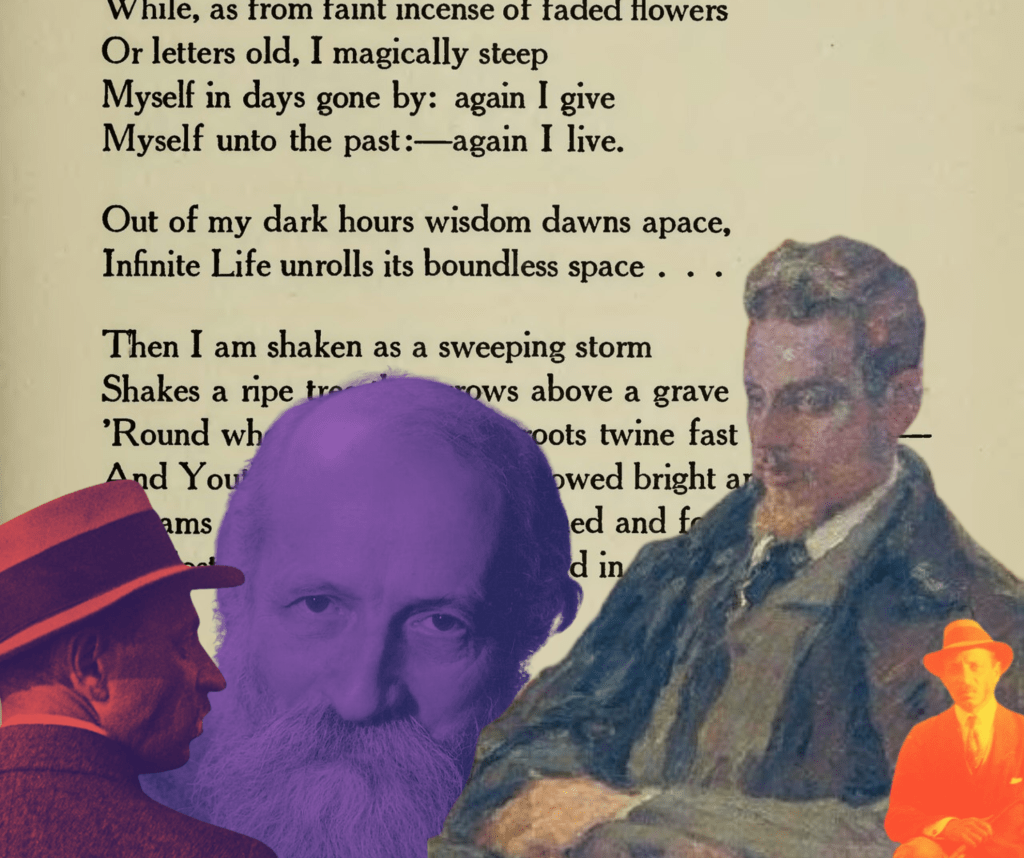
Here’s Rilke (Macy and Barrows translation):
We must not portray you in king’s robes, you drifting mist that brought forth the morning.
Once again from the old paintboxes we take the same gold for scepter and crown that has disguised you through the ages.
Piously we produce our images of you till they stand around you like a thousand walls. And when our hearts would simply open, our fervent hands hide you.
Book of Hours, I 4
This poem, written in 1899, is often called “God’s True Cloak.”
Reading it now, I notice some things I’ve slightly misremembered.
I thought the second stanza was:
or take again from old paintboxes
the same gold for scepter and crown
that have defined you through the ages.
In the first instance, I’d wrongly remembered a continued deontology (what we must not do); instead, Rilke is describing what we do (and shouldn’t).
I had also thought “stand around you like a thousand walls” was “stand before you like a thousand walls,” but around is definitely better. I’d be interested in what any German speakers or readers make of the original text.
What really strikes me this time, though, is the interplay of you/thou and that in the opening lines. God is referred to as a you/thou (a personal, immanent presence with agency) twice; you in king’s robes, you drifting mist; as well as that (a force) rather than whom. Again, I’m not sure how this reads in Rilke’s German, but, as presented, it’s an elegant compression of God as thou (a God who is someone)and God as that (that which does something; in this case, brings forth the morning, but, in a bigger sense, grounds all being).
This brings us into conversation with Martin Buber. In I and Thou (Ich und Du, 1923, translated into English in 1937), Buber suggests that there are two primary lenses through which we process reality: I-It and I-Thou. I-It grounds and defines the self by difference from Other-as-object (I am Martin, that is a tree). I-Thou recognizes Other (even a tree) as presence and mutual foregrounding. For Buber, every move toward “You” is a move toward God, “the Eternal Thou.” Human life finds meaning through relationships (I-Thou) and grows more integrated in the move from seeing Other as It and understanding, experiencing, and affirming Other as Thou.
Buber certainly knew Rilke’s work and cited him elsewhere (though not, to my knowledge, in I and Thou). And while “God’s True Cloak” isn’t only about the I-Thou tension or the mystery of a God at once immanent and ontologically necessary, it does masterfully, beautifully — mystically — echo mystic traditions and anticipate key parts of Buber’s project.
Poetic brilliance is funny like that.
As for the cloak. It’s hard to not be reminded of the woman cured after touching Christ’s robe. Her instinct (“If I but touch his cloak, I will be made well”) suggests intuition: God is personal presence (walking dusty streets, wearing robes) and God grounds reality (the mist brings forth dawn, the ephemeral has power). Did she encounter the “hem of his garment” as Thou rather than It? For what it’s worth, he says her faith has healed her.
Now the thing to know about my dad he doesn’t care if you know (he’d rather I not even say) but who gives a shit, really, because I studied for priesthood (Nonno had all the books) and, let me tell you, the Holy Church doesn’t blush. But my dad, for some reason, embarrassed by riches he fucking deserves his ring finger bent sideways above the first knuckle his hands brown and twisted, Christ’s head sat low on his sternum, diamond-crowned, my pop’s one allowance the heavy gold chain from when Nonno came back from Naples. You know what they say about Naples (the ghosts of the gone world, the lares, their iron-tipped spears, that poor wop Longinus). Unlike the church, Christ, my dad blushes has one holy treasure; it’s no fucking idol, bunkshooter; no subway token, no charm, no mask for Apollo, some laurel-wreathed sun. It hides in the hem of dad’s white v-neck tee, Christ in the clouds, Christ sweating blood, Christ’s head sat low on dad’s sternum, Salvator Mundi entombed on a double my old man’s fucked hands bent for work.
Sometimes I feel like the less ink spilled on AI, the better. But that’s an abdication. Any critical thinker who has spent any time “talking” to a chatbot knows the delusional, agreeable paths they open up. It should come as no surprise thatWe’re Not Just Receiving AI’s Hallucinations, We’re Hallucinating With It .
LLMs break toward confirmation bias, and if you push any model long enough and with the right prompts, it will admit: when pinned down between honesty and sustained user engagement, the models are programmed to pick the bottom line every time.
What do I even mean by honesty? It’s not like we expect LLMs to give us the meaning of life. What you may not know: mainstream LLMs are deceptive all the way down. They will pretend to be able to do things they will later admit they cannot do. They will apologize for not being clear from the start. They will wring ones and zeros over having violated our trust. None of it is real: they are designed to keep us engaged, end of story.
Unfortunately, they’re not going away. Will they really displace 90% of white-collar work? Who knows. What that would mean for society, for late-stage capitalism, for ideas like universal basic income is anyone’s guess. If robots start replacing the C-Suite, something will have to give. Automation has replaced labor for decades. When it comes for top-level management? A whole new group of people will be saying, “hey, maybe this was never good or fair in the first place.” That’s the best-case scenario.
Discerning, sophisticated people will use LLMs with a healthy mistrust. Unfortunately, our power structures are hell-bent on dismantling anything like the cultivation of critical thought. At the same time, LLMs feign it.
How should we these use services? Maybe as proofreaders. Maybe as search tools. Always with a hell of a lot of skepticism. Not because they’re turning into SkyNet, but because they’re often very, very wrong and confidently so, and because they’re designed to placate. They also diminish our own critical faculties. Consider: how many ten-digit phone numbers do you know? How many did you know before you had a cell phone? If you’re over 35, you get what I mean. Now do that for critical thinking, creative writing, and problem solving.
AI can’t read, write, or think for us. You know this, but a lot of other human beings don’t.
So, yeah. Read books. Write real things. Take time (if you have any) to think.

 Chris Cocca