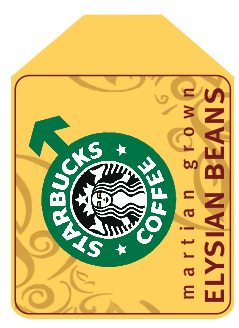
The End of the Cold War as Summated by “Brands of the World”

When deep space exploration ramps up, it’ll be the corporations that name everything: the IBM Stellar Sphere, the Microsoft Galaxy, Planet Starbucks. – Fight Club

We all know that companies (and specifically, the economic polices set forth by mercantilism) played a huge part in the founding of European America.  It’s probably safe to assume with The Narrator that when they run out of stadiums, giant companies will, indeed, have a hand in naming the stars in the next push of industrial expansion.  Behold, friends, The Facebook Nebula.

There’s a reason “branding” has become such a ubiquitous noun-verb in recent years, and it’s obviously tied to our increasing consumption of dynamic visual media.  In a nifty meta-critical move, sites like Brand New and Brands of the World help we consumerist natives remember our lives in corporate logos even as they help curate (you knew it was coming) good and bad design features from which emerging and veteran creatives can draw inspiration or caution.

I’m working on a new infographic for the blog that I hope to put up later today.  During my research, I was struck by the succinct political history implicit in what’s going on here:

Put your shoe on, Nikita.


Considered in light of the grist-milling  Soviet system, “designer: unknown” and “contributor: unknown” become rather chilling political statements.  “Status: Obsolete” heralds the world we still live in:  Soviet weapons and technology still unaccounted for, Soviet scientists still off the grid, regional economies still shaky, but also millions and millions of people more free; in some places, truly, in others by comparison and in degree.  Imperfect, even dangerous as all of this is, we’re reminded again and again that people cognizant of their dignity as human beings will rise to demand that dignity recognized, that sovereignty civilly reckoned with if not yet fully honored.

The CCCP’s obsolescence was as far from inevitable as is the rise of true freedom in Russia even now.  Consider all that remains to be seen as revolution moves through North Africa and possibly beyond.  We have seen freedom ramp up, and if and when it coalesces into free societies and governments, it will be the people that name everything: Free Egypt, Free Tunisia, Free Libya.  Free Iran. What might these emerging societies teach us about our own bondage to the Dutch West India Companies of our day, and to entrenched political attitudes that keep us from the business of prudent, engaged, informed civil life? Might this be the end of the world as we know it?  Let’s hope.


Martian Starbucks by firexbrat via Flickr.

Forthcoming: Social Media is Sincerely Awesome (Sorry, Aldous Huxley)

Good afternoon, friends.

Easy there, Chris.

I’m hoping to record and post two new video blogs later today or tomorrow.  One is going to be about social media in the hands of people watching the revolutions in Tunisia and Egypt from afar. I’ve talked about it already here, but I what I think I’ll end up saying in the new post was inspired by a question from my good friend and frequent reader/commenter here at TDC, Chad Hogg. Chad is a supremely super-intelligent and thoughtful man.  You should read his blog.  By the way, Chad, I’m listening to a track from Tragic Kingdom as I type this.  I thought you should know.

In related links below, Andrew Sullivan makes fun of Malcolm Gladwell for the later’s agnosticism on the impact social media has had on the Tunisian and Egyptian movements.  Confession:  I love Andrew Sullivan and am a frequent reader of his Daily Dish, but I haven’t read the linked piece yet.

R.E.M.
The history of social media contained in an outmoded archival paradigm. Wait, what? Yes.

That said, you probably know that I’ve been very interested in this whole topic and have been following it across various forms of media. Something immediately apparent to me is my almost shocking desire to refer to news sites as “Old Media” in this discussion.  I really was just about to say that I’ve been following the story across New and Old Media online, but New Media is, by definition, online.  We’re realizing more and more, though, that online media is not necessarily New Media.  In many cases, New Media has become old media, and the unquestionably new New Media is social.  Twitter and Facebook are to CNN.com what CNN.com is to newspapers.  I think that’s becoming clear.   But the new New Media isn’t just new.  It is, in very real senses, a media outside of time.  It almost doesn’t make sense to call it New or to even call it real time.  It is the media of witness, and that’s what I’m going to talk about.

If you’re following at home, I’m now listening to the Ronettes.

Last night, I came across this very well-done cartoon that outlines a popular essay about which plausible dystopian anxiety (George Orwell’s or Aldous Huxley’s) is more likely in our present and emerging future.  It’s long, so let me say up front that I think both propositions need to be guarded against (that might be the most obvious thing I’ve said, ever), but that I obviously can’t go all the way with the “Huxley is right” argument when it comes to things like social media.  (And neither should you.  Pesky normative statement alert.)

Needless to say, I believe in curating beauty and that loving things worth loving (and sharing that love) will actually make us better. Loving crap is something different.  Loving pop culture?  Like anything, that’s a mixed bag.  I love Pet Sounds because its beautiful.  I love Elvis because he’s singular.  I love “Sweet Child O’Mine” because it’s awesome and life-affirming.  I think the balance lies precisely there…do the things we love encourage us to live bigger, more fulfilling, more creative lives, or do they diminish the expectations we have for ourselves by their sheer size and repetition?  Friends, isn’t that finally up to us?

The other video will about about The New Sincerity. That is to say,  I think I’m going to encourage everyone to keep on being awesome.