New piece of mine up at Huffington today. Do check it out!

New piece of mine up at Huffington today. Do check it out!
In a way, Handel’s Messiah is a very big part of what I understand about Christmas. I’d seen and heard it long before being a person of faith was something I had to think about and wrestle with, long before I was active in college Christian fellowships or went to Divinity School. It’s one of those things that just sort of centers me in the possibilities of what the season celebrates. John Milton’s “Nativity Ode” does a similar thing. But when my friend Joe sent me this link, I assumed the “Hallelujah” in question was going to be Leonard Cohen’s (which, incidentally, is a very big part of how I think about wrestling with belief).
This video is one of the coolest things I’ve seen in a while. Thanks, Joe!
From the organizers:
http://www.operaphila.org/facebook — On Saturday, October 30, 2010, the Opera Company of Philadelphia brought together over 650 choristers from 28 participating organizations to perform one of the Knight Foundation’s “Random Acts of Culture” at Macy’s in Center City Philadelphia. Accompanied by the Wanamaker Organ – the world’s largest pipe organ – the OCP Chorus and throngs of singers from the community infiltrated the store as shoppers, and burst into a pop-up rendition of the Hallelujah Chorus from Handel’s “Messiah” at 12 noon, to the delight of surprised shoppers. This event is one of 1,000 “Random Acts of Culture” to be funded by the John S. and James L. Knight Foundation over the next three years. The initiative transports the classical arts out of the concert halls and opera houses and into our communities to enrich our everyday lives. To learn more about this program and view more events, visit http://www.randomactsofculture.org. The Opera Company thanks Macy’s and the Friends of the Wanamaker Organ (http://www.wanamakerorgan.com) for their partnership, as well as Organ Music Director Peter Conte and Fred Haas, accompanists; OCP Chorus Master Elizabeth Braden, conductor; and Sound Engineer James R. Stemke. For a complete list of participating choirs and more information, visithttp://www.operaphila.org/RAC. This event was planned to coincide with the first day of National Opera Week.
For clues about upcoming Random Acts of Culture, find us on Facebook http://www.operaphila.org/facebook or follow us on Twitter http://www.operaphila.org/twitter
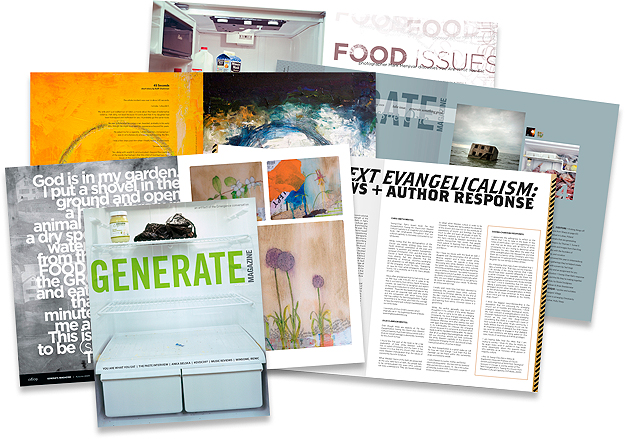
I have a story published in the new issue of Generate Magazine, out now. When my copy comes, I’ll post a picture. The piece is called “Fisher Kings”. It’s very short, and I’m very pleased that it’s included in this issue of Generate.
August, 2010
Last night I was listening to Richard Rohr address a group at Soularize 2007. He was talking about Aquinas and the idea of co-natural knowledge and like seeking like in human experience. Good people see good in people. Kind people see kindness. Hateful people see only through the prism of their hate. So it is with our experience of God: “The divine image in us,” Rohr said, “sees the divine image over there. God in us sees God, God in us loves God. There’s a part of you that’s always said ‘yes’ to God.”
Karl Barth said that the Holy Spirit is the recipient in us of God’s own self-revelation. For Barth, God is the author (Father) of God’s self-communication to humanity, and because God only communicates God’s full and true self to us, this communication is also God’s full self (Son/Logos): the content of God’s self-revelation is God. In Barth’s understanding, the Holy Spirit then is God receiving God’s self-communication (which is also God) in us.
I like both of these related ways of thinking, but there is, of course, something more self-consciously contemplative about Rohr’s application. For Barth, God’s self-communication seems basically initiated by God the Author, and though I doubt Rohr would disagree, he seems naturally more interested in the ways God encounters God’s own creative works in us. For Barth, we are receivers, and for Rohr, I think, we are detectors, maybe Geiger counters.
This morning, as I walked my dog in the first cool August morning teasing Pennsylvania with the rituals of fall, I considered what it is about nature that is so awe-inspiring. What is it about any beautiful thing? Perhaps awe is God in us encountering and recognizing God’s own creation in the world? If so, we are sorts of conduits, not just the hands and feet of God, but in a very real sense also God’s eyes and ears, God’s experiential interface. You might say we are blessed in this way to be a part of God’s own communication with God’s self. We are part of God’s ongoing internal conversation. What else could communion with God mean? Why seek anything less?
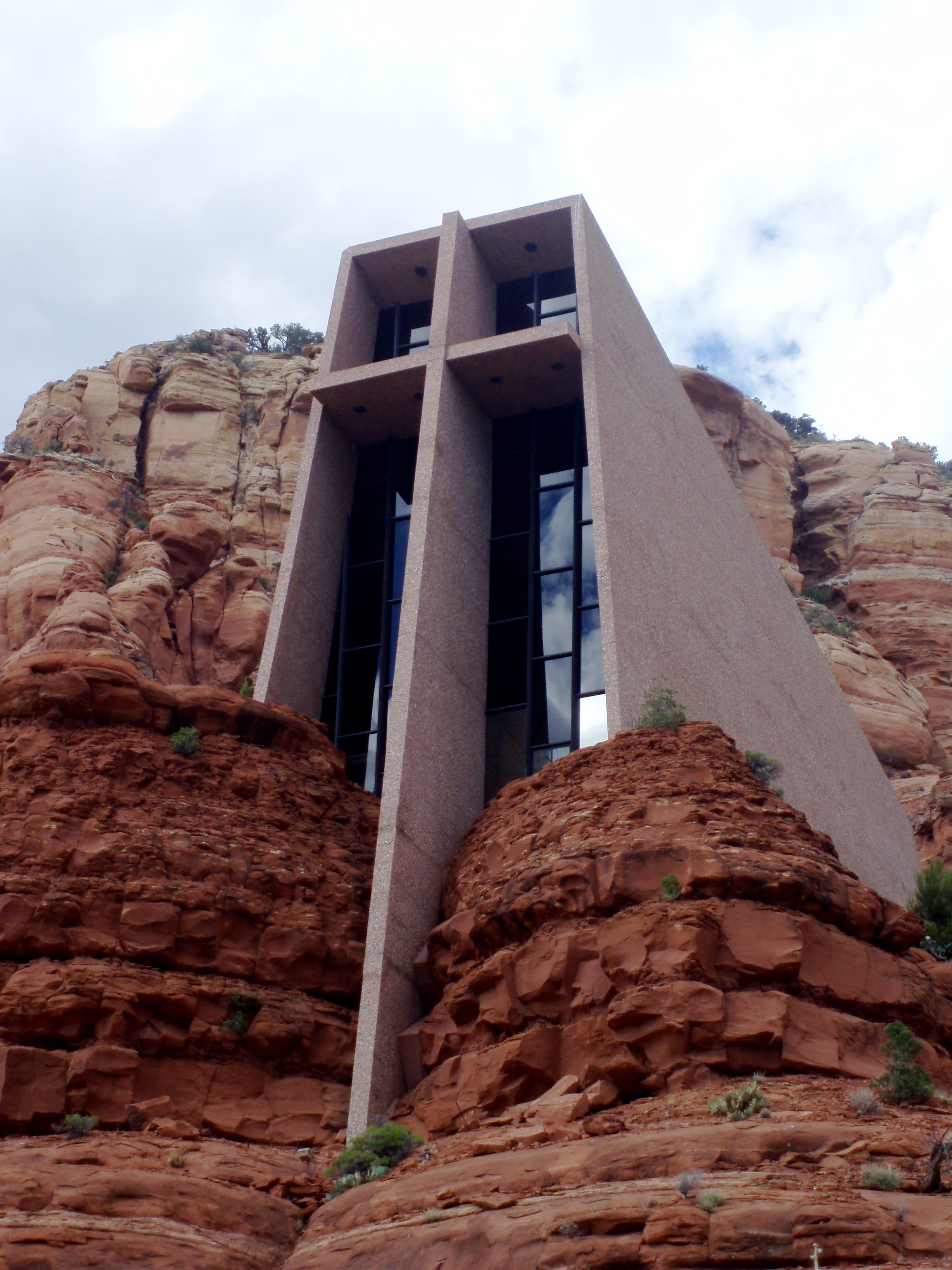
My new piece considering sacred spaces in light of a recent visit to Sedona, Arizona is up at The Huffington Post, here: bit.ly/9VcY2A.
is probably my favorite Radiohead song. I remember the first time I saw/heard it on MTV back in the day. It sounded right.
So I was working in the yard the other day and thinking about it. There’s this Christian concept of Grace, right, very Pauline, very Lutheran, which Bono says is the opposite of Karma. Karma is about the balance sheets and Grace is supposed to be about ripping them up. But I think a lot of people who say they believe in Grace really just use it to reset their Karma. There’s no freedom in it for them. Grace cleans them up for the moment and then they inevitably fuck up and there’s all that guilt. All that having to make things right…not because you owe it to people you hurt (sure, you do), but because you’re thinking somewhere about the kickback. I think it’s tough to know if your piety is piety out of reverence for God or piety for the sake of keeping your karmic shit together. I wonder if you can know.
If Grace is real, it makes Karma unintelligible, doesn’t it? Yet I’m willing to bet that most people who say they believe in Grace live like they’re bound by Karma. Can one be bound by Grace? I’m not sure that makes sense.
A few days ago I told you about hearing “Chicago” at Friendly’s and being lost in a moment. Today I was visiting a nursing home and the same thing happened. A nursing home. Bizarre. I was gone for a minute.
My grandfather passed away last year. He lived for a few years before that in a nursing home. I found out before my visit to the home today that my dad, my sister, and I all dreamt about him (my grandfather) last night.
 Chris Cocca