The Best Songs About Rain

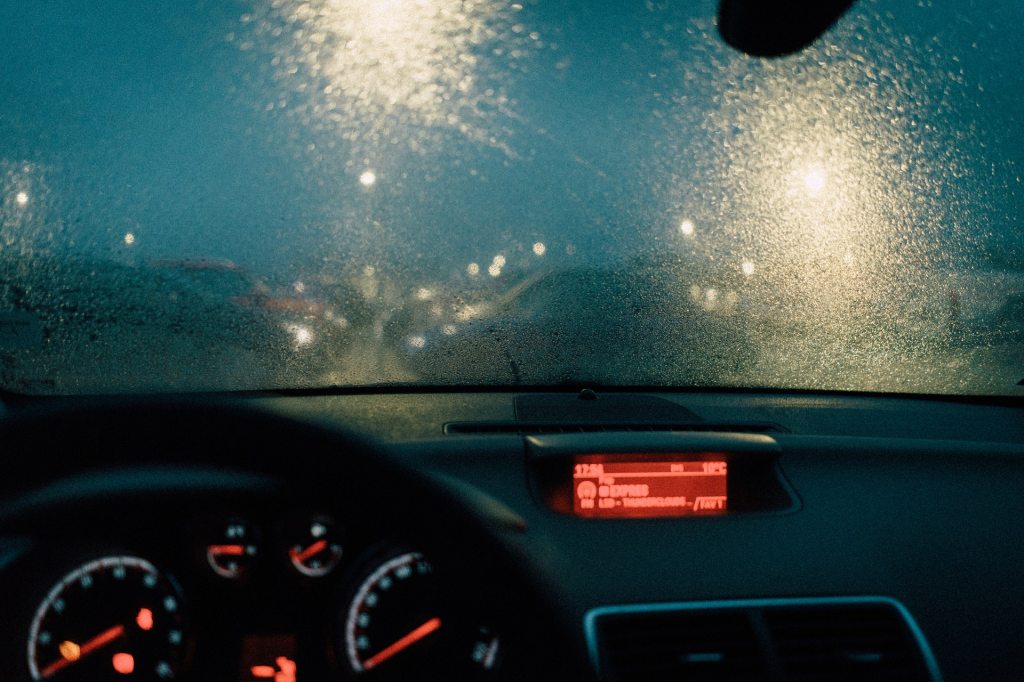
It has been raining for a near-biblical period of time in Pennsylvania. Maybe not forty days, but certainly six.

This morning the sun is shining and it looks again like May. Today I will mow the lawn and pull some weeds. If I have (make) time, I’ll do some writing and revising, which is also like pulling weeds. There’s something very satisfying about these actions.

In honor of the passing rain, here is my current list of Best Songs About Rain, totally off the top of my head as I type:

“Who’ll Stop the Rain?” – Creedence Clearwater Revival

“Have You Ever Seen the Rain?” – Creedence Clearwater Revival

“Purple Rain” – Prince

“Novemeber Rain” – Guns N’ Roses

“Live Forever” – Oasis

“No Rain” – Blind Mellon

What are yours?

Heroes and Villains: Brian Wilson, Donald Trump

I just watched the 2008 Kennedy Center Honors for Brian Wilson. For reasons that are easy to guess — his life story, his genius, his music — I am sobbing.  For other things, too: for him, for us; in gratitude, in fear.

A decade later, neither the country nor the world look anything like they did even in the nadir of the Bush administration. 

Honoring Brian, Art Garfunkel said: “I love rock and roll.  It’s just so joyous and life affirming.  And this is a great moment for me to honor my colleague, a fountainhead of that joy, Brian Wilson. To me, rock and roll is our great American invention.  And the fact that you, Brian, are one of its architects makes me proud of who we are as a country.”  Garfunkel talked about Brian’s “California roots, which to me, always represented the kindness and sweetness of America.”  He called Brian Wilson “rock music’s gentlest revolutionary.”

A few days ago, I read a brilliant piece by writer Gerald Weaver about Donald Trump and the failure of language.

Our innocence, our sweetness, the basic goodness of the premise for this country is the promise of a nation held together not by blood or iron but by consensus on revolutionary claims about the dignity of all people.

I’m not stupid.  I know we have never actually lived up to those ideals.  For centuries, we have systemically disenfranchised our own people.  For decades, we have instigated proxy wars.  For decades, we have have encouraged every kind of inequality.

But we’ve also held onto hope.  We’ve also given a damn about what America is supposed to be and mean. 

Condemning the tear gassing of assylum-seaking migrants at the southern border this week, Beto O’Rourke said, “It should tell us something about her home country that a mother is willing to travel 2,000 miles with her 4-month-old son to come here. It should tell us something about our country that we only respond to this desperate need once she is at our border. So far, in this administration, that response has included taking kids from their parents, locking them up in cages, and now tear gassing them at the border.”

Now the news that Donald Trump is authorizing lethal force.

I think I was four when Geraldo Rivera opened Al Capone’s vault.  He opened something else on Fox News’ The Five (I do not watch it). 

“This tear gas choked me. We treat these people — these economic refugees — as if they’re zombies from ‘The Walking Dead.’ We arrested 42 people; eight of them were women with children. We have to deal with this problem humanely and with compassion. These are not invaders. Stop using these military analogies. This is absolutely painful to watch…We are a nation of immigrants. These are desperate people. They walked 2,000 miles. Why? Because they want to rape your daughter or steal your lunch? No. Because they want a job! . . . We suspend our humanity when it comes to this issue. And I fear that it is because they look different than the mainstream.”

Of course Greg Gutfeld cut him off when he pointed out that economic refugees are in many cases fleeing situations our own policies have helped create.  Of course Jesse Waters, Fox’s Chief of Smarm, looked exasperated.

Of course, tonight, I’m crying over Art Garfunkel and Brian Wilson and America.


Flannery and Sufjan

This is an except from something I wrote a few years ago.  Below it is a Spotify link to the song “Chicago.”

It’s possible to encounter O’Connnor’s stories (you never really just read them) without explicitly discerning her deep, abiding belief in literary art as Christian vocation or her mission to show, as she said, “the action of grace in territory held largely by the devil.” Clear about these motives in her essays and letters, she’s almost never so obvious in her fiction. Perhaps because she uses the evangelical cosmologies of her neighbors as Tolkienesque proxies for her own traditional Catholic systems it’s easy to infer a sort of distance between O’Connor’s art and faith where she in fact saw none. In the same way, it’s possible to listen to Stevens’ biggest hit, “Chicago,” without immediately sensing the plaintive Christian hymn at its core, but “Casimir Pulaski Day,” “Oh God Where Are You Now?,” “The Lord God Bird,” “To Be Alone With You,””God’ll Ne’er Let You Down”… well, these and others comprise a body of work that, like O’Connor’s, raises and answers questions about what makes art “Christian.” Like O’Connor, Stevens operates outside of expectation: his confessional work is among his best, but you’d never call him a Christian artist the way, say, Amy Grant is a Christian artist.

Black Lab, “Time Ago.”

After graduation,  I farmed CDs at Best Busy, the great beginning of the need to make sure everything would always be just so.  I curated Aphex Twins and AC/DC according to their kind, sold DVD players for 400 dollars, caught kids stealing porn and shitty music.  This came on every hour on the Summer of ’98 Best Buy Super Sampler, we played “Closing Time” to kick you out, Katie Holmes was Beatrice in songs sung by The Flys.  How we sensed foreboding, how we savored loss. It was all we knew then, all we could.  It’s most of what I miss.

Steven Hyden’s Look At Billy Corgan

I don’t agree with all of Hyden’s conclusions in this piece (and I’m certainly no Rush expert), but isn’t this a fantastic piece of writing?:

Resentment was very good to Corgan when he invented the original incarnation of Smashing Pumpkins and made it the biggest band of alt-rock’s last, lurching stand in the mid-’90s. It grew — as only the purest, most potent reservoirs of resentment do — from out of the Midwest, festering inside the pinched heart of a nerdy metal kid who knew he would never be accepted by the Thurston Moores and Stephen Malkmuses of the world, with their stupidly perfect mussed hairdos and mysteriously crucial connections to skateboard culture and world-class noise-rock collections. To them, no matter how fast he shredded or how high his choruses soared, Billy would always have sweaty palms and pockmarks and a ruthlessly flowing mullet. Guys like that can just smell the hayseed on you, even through your paisley-colored rock-star clothes, and they’ll never let you forget your place.

I also love this Corgan quote, which Hyden thinks is Billy talking about Billy:

“I can’t think of any people outside of Weird Al Yankovic who have both embraced and pissed on rock more than I have. Obviously there’s a level of reverence, but there’s also a level of intelligence to even know what to piss on. ‘Cause I’m not pissing on Rainbow. I’m not pissing on Deep Purple. But I’ll piss on fuckin’ Radiohead, because of all this pomposity. This value system that says Jonny Greenwood is more valuable than Ritchie Blackmore. Not in the world I grew up in, buddy. Not in the world I grew up in.”

Says Hyden:

If you’ve been following Corgan for these last 20 years, and know how to parse the cogent thoughts from his thatches of twisty-turny grandiosity, you might understand that he’s not talking at all about Radiohead here, and only a little bit about Weird Al and perhaps slightly more about Ritchie Blackmore. That Billy Corgan quote is mainly about Billy Corgan; Al and Ritchie are manifestations of how Corgan sees himself and his place in rock music. He is criticizing the value system that says fashionable and arbitrarily acclaimed (in his view) bands are considered more valuable than he is. Unfortunately, this is the world you grew up in, buddy. Corgan’s feelings of persecution at the hands of a vast, underground, oppressively aloof hip-stapo have been central to his music since at least “Cherub Rock,” one of the few golden-era Smashing Pumpkins oldies that Corgan never seems to tire of playing.

He’s right, of course, that this really isn’t about Radiohead.  And hey, I remember when Adore and all that came out and we couldn’t give it away at BestBuy.  It must have hurt that Semisonic and The Flys where outselling the Pumpkins’ follow-up to Mellon Collie and the Infinite Sadness and it must have hurt more that no one who listened to the record seemed to like it.   I remember Corgan saying he was being punished for being ahead of his time, and I remember thinking it was all an ill-informed load of crap.  But Corgan’s right, isn’t he, about the value system of Whoever It Is that makes tastes and foments critical opinion?  Yes and no, of course.  But if you’re like me, the yes has found you really pissed off about these hierarchies on more than one occasion…typically when your heroes are passed over for reasons that seem to have nothing to do with merit or talent or art.

Billy Corgan was never a hero of mine the way, say, Noel Gallagher was/is, but I was 15 when Mellon Collie came out and I had all those thoughts.  Maybe Corgan’s talking about himself and maybe he’s not, or maybe we just don’t expect this kind of angst about authenticity from people in their 40s.  (Of course we don’t.  Maybe we should.)

Hyden’s right, anyway, about the Mellon Collie Corgan being a Brill Building of his own.  A Baxter Building, even.  Listen to “1979” and don’t feel amazing about some sliver of your youth.  Go right ahead.  Listen to “Tonight, Tonight” and don’t feel like the un-vindicated sixteen-year-old you were.  Not in the world I grew up in, buddy.

And so this post ends up not being about Steven Hyden and only a little bit about Billy Corgan.  And that’s what great writing, like Hyden’s, and great art, like Corgan’s, find us doing.  Sorting out our own histories and narratives and hard-won feelings. It’s why Mellon Collie soared and Adore didn’t.  It’s why I share and quote from pieces like these in the first place.  Buddy.

Jake Shimabukuro at TED and My Episode at the Thrift Store

TED Rediscovering Wonder
Jake Shimabukuro by jurvetson via Flickr

A few months ago, my wife and I were listening to a WXPN interview with Hawaiian ukulele virtuoso Jake Shimabukuro that was nothing short of awesome. As we were about to get out of the car, Shimabukuro said that he was going to play an original arrangement of “Bohemian Rhapsody” to show just what his four-stringed, two-octave ax could do.  Needless to say, we stayed in the car for the next eight minutes.

I just stumbled upon this video of Shimabukuro doing the same thing at TED.  It’s fantastic, and you can’t help but believe what he says about the uke and world peace:

https://ted.com/talks/view/id/1063

A few days after the World Cafe session in our car, I found a ukulele at the Salvation Army thrift store.  I think they wanted four bucks, and it came with instructions that had clearly been printed before 1970.  So I picked it up as a gift and immediately informed the giftee of my impossible find.  As I was carrying my new hipster treasure around the store, I noticed two young ladies in my peripheral vision.  I sort of got that feeling you get when people are talking about you, and then I heard one of them say “should we say something to him?”  My first thought was “my fly must be down.  This is embarrassing.”

If only.

The question emerged:

One of them: “How much do you want that ukelele?”

Me: “Like, a lot.”

Them: “Really?”

Me: “Yeah.  It’s going to be a gift.”

One of Them: “Oh.”

The Other: “See, I told you you shouldn’t have set it back down.”

Me: “Honesty, I would give it to you if I hadn’t already promised it to someone else.”

Them: “No, that’s cool.”

But I don’t have to tell you how it feels to have a find like this slip through your fingers.  Remember the vocab word crestfallen?  I would have been, too.  Thankfully, they were really cool and didn’t make me feel bad.