I’m cool with him reading Marianne Moore and Wendell Berry, but he’s definitely into my unfinished drafts. The nerve of this guy.
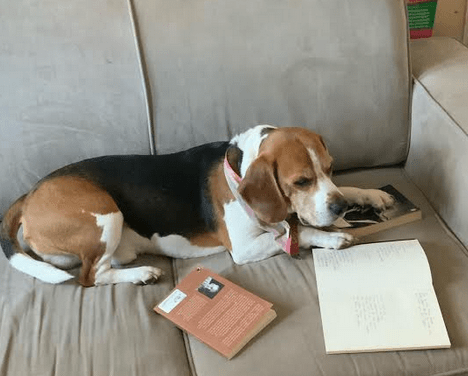
I’m cool with him reading Marianne Moore and Wendell Berry, but he’s definitely into my unfinished drafts. The nerve of this guy.
A great short piece at Matchbook today by Jennifer Howard.
I got this from Jon Winokur’s twitter feed. It’s a lot like what Benjamin Taylor and Robert Antoni taught me at The New School:
“The responsibility of a writer is to excavate the experience of the people who produced him.” – James Baldwin
Leave it to James Baldwin to define this whole addiction and ordeal so briefly, so clearly, so truly.
A new piece of mine is up today at The Daily Drunk! I’d be delighted if you took a few minutes to have some fun with it.
Merry Christmas, everyone!
From Jay Parini’s site:
“There is really only one worthwhile piece of advice. Write about what really interests you, and do it every day…”
Read the rest here, and check out Jay’s work while you’re at it. I really like what he says about reading and writing going hand-in-hand. When I am having a hard time writing, reading is always a kind of key.
To you biographers of Caesar,
            I am that murdered general,
a Roman nose engraved on silver coin;
an alabaster column in perfect Roman order,
            a sword, a plough, a prefect,
a century of soldiers—
a bumper crop in Tunis or in Spain.

 To you biographers of Peter,
            I am that Prince Apostle,
a Hebrew man enshrined beside the Po;
a traitor and evangelist fell prey to Roman order,
            a sword, an ear, a net for men,
a century of soldiers—
an empty cross along the Apis train.

 To you biographers of Arthur,
            I am that coming high-king,
a Celtic myth in Celtic pride entwined;
a pauper and a prince, once, before the Roman order,
            a sword, a stone, a chalice,
a fief of noble soldiers—
the Cup of Christ long kept by England's swain.

 To you historians of Athens,
            I am that naval power,
the wisdom of my people long beheld;
Master over Sparta before the Roman order,
            a sword, a fleet, the polis,
a city-state of scholars—
the light of pagan Europe in my blade.

 You genealogists of Adam,
            I am the father sinner,
God's firstborn from the dirt of Eden's shade;
a farmer and a workman, the sewer of disorder,
            a sword, a tree, the rocky earth,
left to my warring children—
their history still in my image made.
I wrote this maybe 15 years ago while I was reading Leaves of Grass. The poem is really nothing like “To a Historian,” but I loved that title so much. I think that was the impetus.
Spacetime is a crooked smile
bent to match the mouths
we love and taste and pray with.
First published at Quatrain Fish.
 Chris Cocca