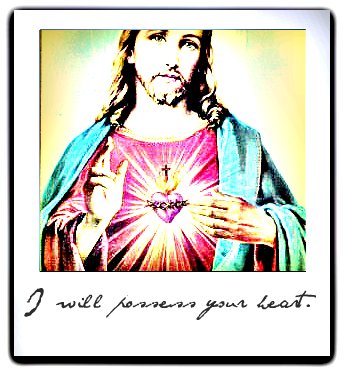
The Good News is Supposed to Be Good

And Jesus said “the time has been fulfilled.  The Kingdom of God is has come near. Repent, and believe the good news.”

“Master,” they said, “what is the good news? Tell us, so that we might believe it.”

And Jesus answered them:  “the time has been fulfilled.  The Kingdom of God has come near. Repent, and believe the good news.”

And Jesus ministered in Galilee, proclaiming the good news of God.

Until the Sea Shall Free Them

Reminds me of “Suzanne” by Leonard Cohen. Excerpt:

And Jesus was a sailor
When he walked upon the water
And he spent a long time watching
From his lonely wooden tower
And when he knew for certain
Only drowning men could see him
He said “All men will be sailors then
Until the sea shall free them”
But he himself was broken
Long before the sky would open
Forsaken, almost human
He sank beneath your wisdom like a stone
And you want to travel with him
And you want to travel blind
And you think maybe you’ll trust him
For he’s touched your perfect body with his mind.

Paul Pierce and Gospel Poetry

I spent most of the day working on a message inspired by 1 Corinthians 1:18- 25.  In that passage, the apostle Paul says that the cross and the message it sends are foolishness to the self-styled wisdom of convention, but to those who “are being saved, it is the power of God.”

I’ve spent a lot of time thinking about the ways the life of Jesus bucked convention. His birth and upbringing, his passion, death, and resurrection. let alone his passion, death, and resurrection.  Te irony, subversion, and poetry of Christ’s story is precisely what I find so compelling.

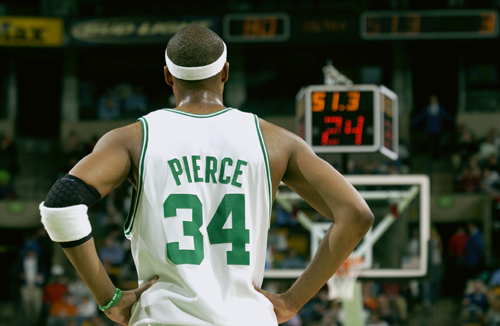
Last night, while I watched Skip Bayless and Stephen A. Smith throw down about the trade rumors swilring around Celtics point guard Rajon Rondo, I did a little reading up on lifelong Celtic forward Paul Pierce.  It’s not often that professional athletes quote Mark Twain and Blaise Pascal on the front page of their website, but as Shaquille O’Neal will tell you, “Paul Pierce is the Truth.”  As Pierce’s website reminds any nonbeliever:  After a Lakers’ victory over the Celtics in 2001, O’Neal pulled a Boston reporter over and gestured toward his notepad:

“Take this down,” said O’Neal. “My name is Shaquille O’Neal and Paul Pierce is the [%*$&ing] truth. Quote me on that and don’t take nothing out. I knew he could play, but I didn’t know he could play like this. Paul Pierce is the truth.”

Compare that wit the first three verses of the apostle Paul’s letter to the Corinthians:

“Paul, called to be an apostle of Christ Jesus by the will of God, and our brother Sosthenes, to the church of God in Corinth, to those sanctified in Christ Jesus and called to be his holy people, together with all those everywhere who call on the name of our Lord Jesus Christ—their Lord and ours: Grace and peace to you from God our Father and the Lord Jesus Christ.”

My name is Paul and this is how it is with Jesus. 

My name is Shaquille O’Neal and Paul Pierce is the truth. 

Sometimes that’s how I feel about the poetry of Jesus’ story.  Whatever else, that poetry’s the truth.

“Fiction is bound by possibility,” Pierce quotes Twain as saying, “the truth is not.”  Pascal adds, “we know the truth not only by reason, but also with the heart.”

Freeganism, Food Deserts, Free Markets: Where the Invisible Hand Fears to Tread

I help convene a monthly discussion series at the Allentown Brew Works called Beerituality.  Last week, we welcomed guests Cathy Frankenberg and Jon Geeting and wrestled with the topic of food deserts in the urban cores of the Lehigh Valley.  Cathy is a founding organizer of an initiative to establish a food co-op in neighboring Bethlehem, and Jon is a political blogger/journalist with a special interest in the urban transformation happening in Allentown.

As you might imagine, we had a very good time of discussion and participation.  I’ve been vexed by some of the realities we’re encountering on this issue, not the least of which being the problem of food waste in America, even in this awful economy.

Enter Jane Velez-Mitchell from CNN Headline News and a piece exploring “freeganism.”  Freeganism is dumpster diving for still-edible food behind restaurants and grocery stores and cooking those salvaged items for dinner.  For some reason, I’m reminded of Jesus picking wheat on the Sabbath as he walked through a field he didn’t own.  I’m also reminded of the practice we see in the book of Ruth, when grain that fell to the ground during harvest was left for the scavenging needy.  But at least that grain wasn’t thrown in the garbage for no good reason.  At least people who needed it didn’t have to scrounge in dumpsters.

We’d like to think we’re so much more progressive on so many fronts than our ancestors, but on issues of food and shelter, our older traditions have sometimes echo the kind of sustainable ethos that comes with living close to the land and the means of production.

This has everything to do with the problem of food deserts here and now. It has everything to do with how we will respond to the needs of our community.  For more commentary on the free market’s failure to bring healthful food to food deserts, read my recap of last week’s Beerituality gathering.

Sacred Fire, Holy Saturdays, Sunday Morning Calls

Tomorrow’s scripture readings/lessons in many churches will be these, brought together by the liturgical themes of Transfiguration Sunday.  I was blessed to be part of conversation this week about the need even we postmoderns have to leave spaces where we experience the holy different from how we found them.  In the story of the transfiguration, Jesus’ disciples long to build booths to mark what they’d experienced, or, perhaps, to provide shelter so they might stay in the presence of the transfigured Christ forever.  During Sukkot in New York, some contemporary Jewish groups build temporary booths in Union Square, and if you’re like me, you can’t come up from the steps of the subway without wanting to linger and explore them.  Throughout the Hebrew Bible, the Children of Israel build altars or monuments to mark the places where they encountered God, even in the middle of rivers.

Today was Whitney Houston’s funeral.  I wasn’t able to watch it, but it prompted W.W. Norton to promote this book, which looks amazing. I want to judge Norton harshly for using an oblique reference to the service to promote their wares and their brand on Twitter, but I also know that sacred fire is confounding.  Was Norton taking part in the kerygma today?  I can’t say, but I can say that the Holy Ghost has done stranger things, even to me.

Some parting music as this night bends towards Sunday morning: