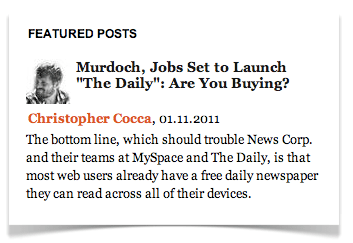
 My first post for Huffington’s media section is featured today on the site. It picks up from yesterday’s post on this blog, but considers News Corp.’s “Daily” move in conjunction with yesterday’s announcement of a %47 layoff at subsidiary MySpace. Click the image to read, and please do comment. Thanks!
Category: writing
Literary Journal Ads from 1990
I found these in a 1989/90 issue of Pequod. The cropped set in color follows the same set uncropped in black and white. You can also view them on Flickr.








Why Pay Even This Much?: Murdoch and Jobs Set to Launch “The Daily”
You might know that News Corp. is set to launch “The Daily”, its much-anticipated (because everyone says so) daily iPad newspaper project next week. According to Cutline, Steve Jobs will be joining Rupert Murdoch for the big event.
As Courtney Boyd Meyers notes at The Next Web: “‘The Daily’ is expected to cost .99 per issue and will implement a new ‘push’ subscription feature from iTunes that automatically bills customers on a weekly or monthly basis, with a new edition delivered to your iPad each morning.”
I have one very basic question. Are you willing to pay .99 a day for content you can get elsewhere for free? Sure, “The Daily”‘s content is exclusive according to a passing definition, but this only matters if you believe that people will pay to read “Daily” writers instead of their analogs on free news sites and marquee free niche and general interest blogs. While it’s true that the who and how of written content have been reasons for preferring one print publication over another, the same rules don’t apply when deciding what might compel you to buy a print magazine or paper instead of finding comparable web treatments of the same issues, trends, and interests . If online (largely free) content is killing print, why should people pay for “The Daily”? I won’t discount the pull of novelty and the excitement people muster about having the latest new thing, even if that thing is ephemeral (not to mention ethereal). And I haven’t forgotten how the experts said “no one will pay .99 for a song” and how all of those experts were wrong. I also haven’t forgotten that no one I personally knew was saying that, that most people wanted a cheap, easy, legal way to get songs online. There was a need, and Steve Jobs filled it.
I don’t know anyone who feels badly about reading free online content instead of plunking down subscription fees or cover prices for print. It’s been said so much, but the rising (really, already risen) culture of consumers expects this kind of content to be widely available and largely free. $30 a month for a newspaper, even a really cool, Steve Jobs-enabled one, doesn’t feel like a solution to anything. It’s neat that creative people built the device and creative people of a whole different skill-set are using it for what will be, I’m sure, an intuitive and even beautiful publication. But unless the endgame is the movement of all relevant content everywhere behind a handful of corporate pay walls…well, actually, that doesn’t even matter because it can’t ever happen as long as the net is neutral. Crap. I told you penmanship was the engine of democracy.
In any case, in 2011, most people have a daily newspaper they can read across all of their devices, and it even includes super-localized updates about the people they care most about. It can be custom-tailored, with very little effort, to their specific interests. It’s free. It’s huge. It’s Facebook.
The Story Behind “The Politics of LOST” Posters and Some Paleo-Futurism of My Own
Christopher Cocca
When I hunkered down with fiction last year, I took many, many old posts off-line as a way of resetting my own internal narrative and focusing on a very different way of writing. I’ve talked about that a few times on this blog since. I had the sense that I needed to let the fiction I was writing say everything I was wanting to say, and it was a good choice for me then. Between now and May, I’ll be writing fiction more intensely than ever, but I’m also thinking about blogging (and nonfiction in general) in new ways. This year, I have the creative room (and patience) for both. See kids, getting older’s not so bad.
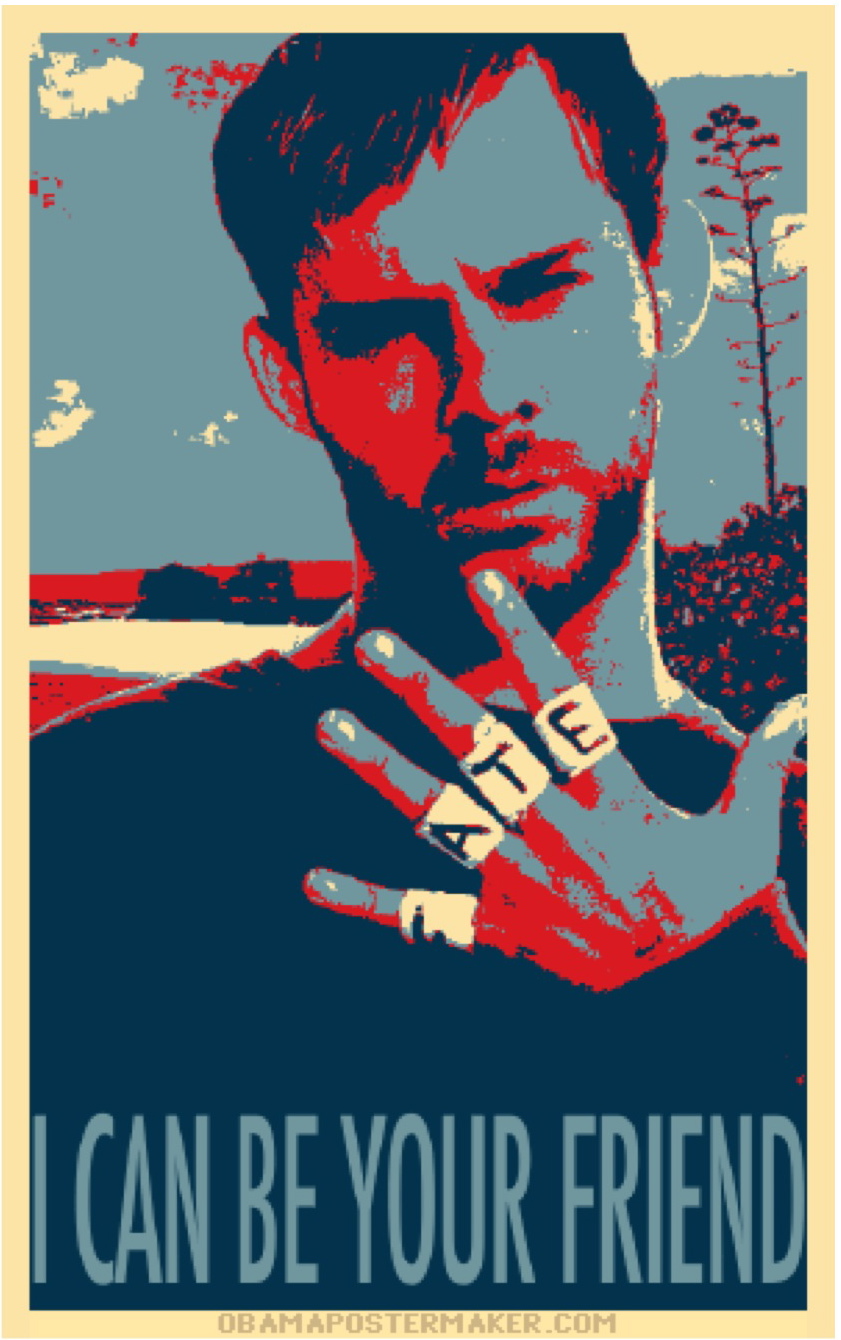 I was looking over some old posts to re-release today (digitally remastered in sweet, sweet mono) and I found this explanation behind the genesis of the LOST posters I shared on Saturday. Credit where credit is due: my wife was the inspiration behind that project. I also forgot that the creator of the Obama Poster maker website that I used came by to comment on the post. It’s funny how time flies and how quickly you forget things. Adjusted thoughts on aging: +1 for patience, -1 for memory.
I similarly found “What The Future Used to Look Like“. It started with the idea that terraforming the universe is our moral duty as creatures and ended up being a free-association/stream-of-consciousness thing about the politics of futurism.
When you have a minute, consider looking over your own old posts or journal entries and see if you don’t surprise yourself. What were you writing about this time two years ago?
Sundry Appeals to the Aficionado Within, Part 2
Saturday’s entree to this topic talked about Nickelodeon and the Power Rangers. One of my favorite comments came via Facebook: “I saw the commercials myself. [My son] even looked at me and said ‘That looks cool, dad.’ I said, ‘it’s actually the exact opposite!'”
Precisely.
The key to the success of the franchise was Saban‘s crafty decoupage of cheap footage, martial arts, dinosaurs, and robots. Today’s post seeks to mimic that same spirit by sharing two links recently added to my Friends, Conspirators, Etc. page: Paleo-Future and UniWatch. If you love sports branding minutiae and get as depressed as I do about the fact that we don’t have flying cars or moon colonies, you’re going to love this post, as seen here.

Paleo-Future and UniWatch are united in their subtleties: you can’t look at old flannel baseball uniforms or hopeful, dated predictions about the future without resigning to the larger truth that everything was much, much, cooler before you were born or when you were young. It’s not your fault that this is true, and it nicely explains your love for all things old school. These websites fill a need. We need better visions of the future (and actual goals) and better art in sports. Do your part by wearing a coat and tie and fedora to your next ball game, won’t you? Buy your child a telescope, friend.

United in understated yearning for the glory days that were and the glory days that weren’t, the paring of Paleo-Future and UniWatch is, in other ways, a study in contrasts. P-F is run by one very creative person (Matt Novak) while UW has at least two (Paul Lukas, Phil Hecken). P-F updates often, but not as often I as check. UW updates all the time. Both sites have enough back catalogue to keep you occupied for hours.

I’ve considered for some time whether nostalgia is actually cynicism. These days, I don’t think so. The resurgence of the postmodern Phillies “P” on 20 and 30somethings around Citizen’s Bank Park was, before the late 2000’s, an homage to the last great Phillies era but also a celebration of childhood context. It’s what the Phils wore when we were kids. It’s a cultural artifact, but the fact that it’s what the Phils wore when we were kids is enough to make it important to us now. The celebration of context is the reason that any design aesthetic 20 years old or older has immediate traction now. On a long enough timeline, even the ugliest stuff becomes beloved.

While UniWatch curates what was, and encourages readers to submit their own designs for what should be, Paleo-Future has a mission that’s fundamentally more unsettling. Here, Matt Novak shares what he and his readers have discovered about a world that (mostly) should have been but wasn’t. Spend more than a few minutes on P-F and you’ll start really wanting every technological advance the early Post-War period promised. I’m not talking about robots that do everything for you, either. I’m talking about sustainable, green infrastructures and food supplies, efficient, inexpensive travel options, human outposts on the Moon. The hope in most of the images Matt shares jumps right off the screen and makes we wonder if William Hanna and Joseph Barbera shouldn’t have served as undersecretaries of NASA, reporting to Gene Roddenberry and Walt Disney.
These are both fantastic blogs. Send them love.
UPDATE: I just found this old P-F inspired post in my offline archive. I just moved it back online, as I’m periodically doing with other old posts. This one is a free-association writing prompt from one of Matt’s pictures and the thoughts that followed.
Sundry Appeals to the Aficionado Within, Part 1
.
 Nickelodeon. The channel’s migration up our 80’s and 90’s dial is fixed in my memory: 27, 29 (later the Family Channel), 32, 34 (later Telemundo), 36 (or, as my sister called it, “three-six” as in, “oh brother, how about three-six!”), 42. I can’t even tell you what it is now because there are like seven of them, but they’re in the 260s and 270s, nimbly doing their thing around offerings from PBS and Disney. (Remember when you had to pay for the Disney Channel?)
The first time I saw Nick was at my grandparents’ house, a Special Delivery cartoon about the American Revolution (awesome). A few weeks later, at my other grandparents’ house, I discovered Nick at Nite. It must have been 1985 (the year Nick at Nite debuted), because I could read the word Nite but couldn’t figure out the context. In any case, it was way better than The Blanket Show.
A few days ago, I saw a commercial for the newest iteration of the Power Rangers franchise. The Zords are coming to Nick:
Yes, my first thought was: “Really, Power Rangers? 15 years later and you have the same exact production values? Even I don’t rock flannel on flannel these days.” 

Speaking of 1993, I was 13 when Power Rangers debuted in the US. I think I was 15 when I decided to start being ironic. And it was on right before Animaniacs (smartest cartoon masquerading as kid’s show of all time? check), so, you know, I caught a few eps. Plus I had a little sister (which was also my excuse for watching Eureka’s Castle, though I’ll never disavow my love for David the Gnome). It didn’t take long to realize the four main reasons the Power Rangers became so massive:
- Martial Arts
- Dinosaurs
- Robots (that transform)
- All of those things together
Production values? Uncheck. That old footage Saban had lying around happened to combine the three coolest things ever, and that’s all it needed. Speaking of which, later today or tomorrow I want to talk about two awesome blogs that I could spend hours and hours and hours on. Sports uniform history minutiae AND visions of a future that never was? Yes. Yes I will share that goodness with you.
A preview:
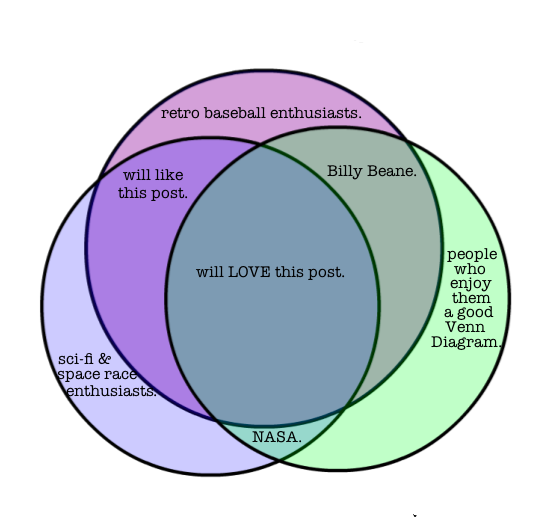
Billy Beane!
[Update: Read Part 2 here.]
The Radical Welcome
New piece of mine up at Huffington today. Do check it out!

 Chris Cocca
