I graduated from high school in 1998 and made the excellent choice of working at BestBuy that summer. My domain was the media department, and my duties included farming CDs (I love doing that. I started doing it at stores I didn’t even work at), helping customers make not-sucky choices (I added that to my job description), catching would-be shoplifters (the best), stocking shelves, and looking stuff up on the DOS databases. I was also expected to try to sell monster cables to people buying new media equipment and service protection plans for PlayStations. I was better at the other stuff.
All of this is important for a few reasons:
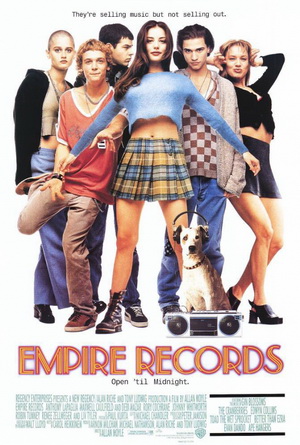
Working at BestBuy was like what I imagine working at Empire Records would have been like if those meddling kids hadn’t convinced Joe (that really is Anthony LaPaglia, by the way) to damn the man. At BestBuy, all the Ethan Embrys worked in media and all the Renee Zellewegers worked the registers. We had polo shirts and BHAGs and talked about shrink. My immediate supers, which were team leaders directly below the department manager, were in their mid-twenties, which made them world-wary and wise. One was a Zeppelin freak, the other was bound to name his first son Sid Barrett. DVDs were very new and DVD players were very expensive. Where were the Liv Tylers, you ask? Grow up, dear reader. There’s no Liv Tyler.
Some really good music came out that summer, much of which we listened to for hours on end via the Turn On The Fun Summer Sampler.
I got to buy the biggest microfridge ever made on the cheap because of my employee discount. To the gentleman who had that item reserved and never came for it, we did try to call you. 300 feet of rope later, my best friend and I sailed that thing down Rt 22 West in one of the more harrowing transports of our lives. I’ll be honest, it may have been 300 yards. If you think you can’t load two microfridges into one 12-year-old Tempo, think again, friend. Think again.
That second point, as you may have guessed, is the one we’ll be exploring today via a round-up of archived posts from 2009 about 90s music and 90s awesome. (I doubt you could have guessed anything after the word via, so I hope you like your surprise. I made it just for you. If you hate it I can take it back, or make another out of tears.)
The Roundup:
Speaking of tears, here’s one of my favorite post titles ever: How Not To Be Sad About the 90s. The impetus for that one was that someone really did make their way to this blog by searching that term. Bear in mind that this post is 2-and-half years old, written well before I learned to stop worrying and love the blog. Also before I lightened up about a lot of things. Turning 30 is now like what growing a mustache was in the 70s.
Sad (Great) 90s Songs, Part II is a follow-up to above, mostly because I’d finally figured out what the third song in the sad (great) BestBuy song trilogy was.
Oh, and don’t let anyone fool you. I still can’t watch that Flys video without losing my mind about how the 2000s turned out. Still, one thing I’ve learned since writing these old posts is that sometimes, you really can pick up with people right where you left off, and that sometimes, old contexts aren’t as important or as fleeting as what you keep on doing.
When deep space exploration ramps up, it’ll be the corporations that name everything: the IBM Stellar Sphere, the Microsoft Galaxy, Planet Starbucks. – Fight Club
We all know that companies (and specifically, the economic polices set forth by mercantilism) played a huge part in the founding of European America. It’s probably safe to assume with The Narrator that when they run out of stadiums, giant companies will, indeed, have a hand in naming the stars in the next push of industrial expansion. Behold, friends, The Facebook Nebula.
There’s a reason “branding” has become such a ubiquitous noun-verb in recent years, and it’s obviously tied to our increasing consumption of dynamic visual media. In a nifty meta-critical move, sites like Brand New and Brands of the World help we consumerist natives remember our lives in corporate logos even as they help curate (you knew it was coming) good and bad design features from which emerging and veteran creatives can draw inspiration or caution.
I’m working on a new infographic for the blog that I hope to put up later today. During my research, I was struck by the succinct political history implicit in what’s going on here:
Put your shoe on, Nikita.
Considered in light of the grist-milling Soviet system, “designer: unknown” and “contributor: unknown” become rather chilling political statements. “Status: Obsolete” heralds the world we still live in: Soviet weapons and technology still unaccounted for, Soviet scientists still off the grid, regional economies still shaky, but also millions and millions of people more free; in some places, truly, in others by comparison and in degree. Imperfect, even dangerous as all of this is, we’re reminded again and again that people cognizant of their dignity as human beings will rise to demand that dignity recognized, that sovereignty civilly reckoned with if not yet fully honored.
The CCCP’s obsolescence was as far from inevitable as is the rise of true freedom in Russia even now. Consider all that remains to be seen as revolution moves through North Africa and possibly beyond. We have seen freedom ramp up, and if and when it coalesces into free societies and governments, it will be the people that name everything: Free Egypt, Free Tunisia, Free Libya. Free Iran. What might these emerging societies teach us about our own bondage to the Dutch West India Companies of our day, and to entrenched political attitudes that keep us from the business of prudent, engaged, informed civil life? Might this be the end of the world as we know it? Let’s hope.
When I was in my MFA program, I felt like the luckiest person in the world. My classmates were amazing, my teachers brilliant. My job in that course of study was to learn, as best I could, how to build a story. Ann Hood told us that whatever our latent talent, we were there to learn how fiction works, and how and why it doesn’t. She taught us to be merciless with the things we thought we’d been so clever about, and, in short, to blow them up.
Joseph Conrad reminds us that revision literally means to see anew. Ann might say that revision isn’t a necessary evil but a necessary good. Someone else said “anyone can write, but only a writer can revise.” Most honest writers will tell you that the story is really written in the revision.
Beginning writers sometimes feel so beholden to their initial muse that they mystify everything and end up producing very little. Writing is a craft. Yes, it requires inspiration. There are days when I stare at the page or the screen and do very little with my hands. Then there are days when the ideas and language flow. I can’t control which day is which, but I can do by best, on the slow days, to prepare myself for the fast ones. The later are more thrilling, for sure. But they don’t come without the former. Feeling stuck? Read a book. Watch a well-written show. Listen to a song that keeps raising the narrative stakes.
A few months into any Golden Age comic book archive, you’ll come across the origin story of the title’s featured character. Blogging, really, should be no different. Comics emerged from the frenetic, sensationalist media of the early 1900s, and blogs emerged from the frenetic, media-saturated lives of people living on the other side of a century that saw the best and worst communications innovations in human history.
Lazily.
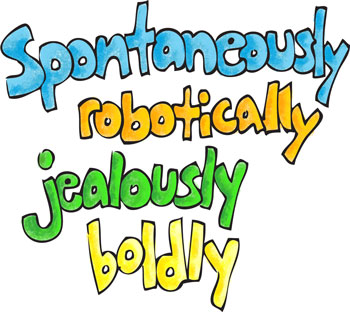
Chriscocca.com started as christophercocca.wordpress.com in January of 2007. I used the Hemingway theme, and the goal was very simple: I wanted a place to share my publishing news. I was submitting to online and print journals for the first time and had some very early success at those venues (Geez, Brevity, and elimae being the most notable). Eventually I started blogging about craft, which really means I blogged about instinct. One thing I knew for certain was that there were still way too many people using way too many adverbs. To wit, a post from November, 2007, currently in the classified archives:
I hate adverbs. I loved them as a clever little kid, but that was before (insert your own defining literary experience here). Except joyfully, and only when used in reference to the way Uncle Feather flew around Fudge’s house and pissed off Fudge’s family.
I should say about word here about Uncle Feather. When I was 10 or so, my dad helped me write a book report about Superfudge, and we had a good laugh describing UF’s manic flight around the Hatcher kitchen with the world joyfully. First of all, joyfully is a pretty funny word, not because joy is funny, but because it’s kind of one of those words you save for big, important experiences. The thought that a myna bird would do anything joyfully cracked me up. Also, visualizing a myna bird joyfully flying around a room while exasperated keepers try in vain to bring him down, well, I don’t care how old you are, that’s a) hilarious and b) extremely gratifying.
I was writing a lot of terse, evocative microfiction in 2007, and my blogging style from those days reflects that. Eventually, I developed a fuller style, but it was still a very at-arm’s length approach. I don’t think I blogged for fun, even when I was blogging a lot about things that were important to me. But I suppose I thought writing wasn’t supposed to be much fun, either. I mean, this is serious business, after all, and I didn’t want people thinking I was some lamebrain goofball blogging about episodes of LOST and He-Man. My, how things have changed.
My love/hate relationship with blogging in this space went on and on and on. Last year I took a big long break to focus solely on my fiction, and I think was a good move for a few reasons: 1) It gave me time for fiction and 2) it separated me from the constant head-checking I was doing before every click of the WordPress publish button. I needed to get out of my head and into my gut, and I needed to say what I needed to say in ways that weren’t so tied up in my own personal narrative. There were great discussions happening on the blog by then, but all of the sudden I knew that if I was going to dedicate the kind of time and mental energy that a book would require, I was no longer going to be blogging about the ontological grounding of being (okay, okay, it’s God) for a while.
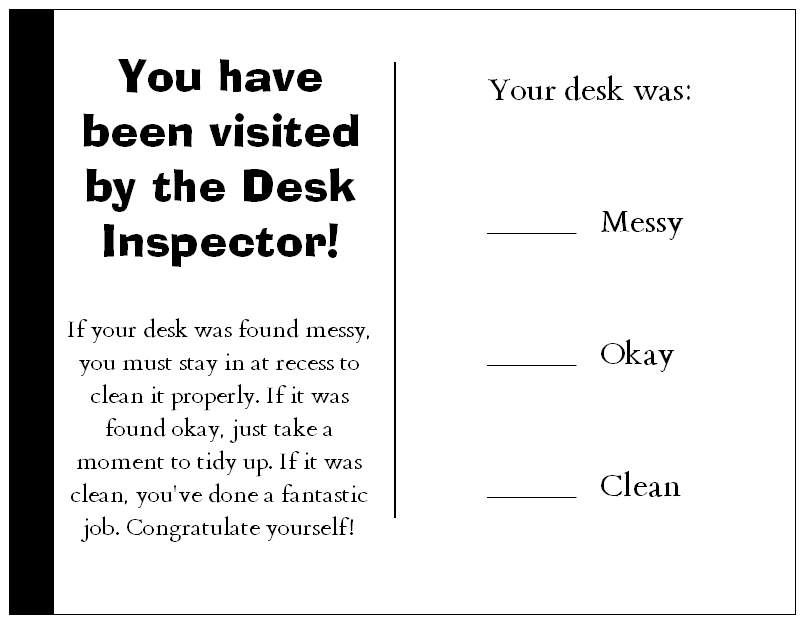
Maybe the Desk Inspector should mind his own damn business.
This year, I lightened up. I don’t know exactly why or how, but I have a few guesses. One thing I know for sure is that I started blogging more as soon as I finally designed a banner I really, really liked. When I started playing with the images and thinking of what to call this new welling up of whimsy, The Daily Cocca popped up from the suppressed creative places I’d been trying to cram other projects into. Simple as it sounds, a new banner and new layout energized me to have fun with content, to get out on the WordPress ecosystem and to make connections. Specifically, the picture of me as kid really makes me happy. Look at that smile. That kid is happy, fun-loving, and full of a million crazy ideas. That’s the kid who had the messiest effing desk you’ve ever seen, sloppy handwriting, poor time-management and every other awesome thing no one should really have to worry about as long as they’re young enough to wear a clip-on tie. Seriously, what was the deal with the clean desk obsession? If my desk could close, it’s none of your business. If it can’t close, give me a minute. No, no, I left that book at home. You should be happy…it’s not cluttering up my desk.
Where were you when I needed you, Lego Charles Dickens?
Side note: One time in elementary school the teacher was going on and on about something, and I started drawing awesome totem-pole-like doodles up and down the margins of my notebook. This was in a pretty early grade. We passed the books in and I didn’t think anything of it. A few days later, the teacher called me in from recess to talk to me about my doodles. I thought she was going to say how cool they were. Instead, she made me stay inside and erase every single one. I didn’t realize then what I stifling act of idiocy this was. I knew she was being stupid, but I didn’t relate it to this whole idea of feeling like you have to parse your creative side and intellectual side until recently. So let the 31 year-old speak now for the 8-year old who only wanted to draw comic books or play baseball for a living: hey, any grown-up who cares more about order than innovation, more about clean lines and desks than creativity, compassion, nurturing, sustainability and raising up kids into whole people: not cool.
Yeah, so the messy desk thing is sort of mantra for me in this sense: it means be who you are in each of the ways that matter. Write your fiction and your poetry as starkly (adverb!) or as richly (stop it!) as you want, and do your blog whichever way feels right. People are complicated, people have different interests, different modes, different ways of communicating in different circumstances and for different reasons. Why should you or I be any different?
Yesterday, I linked to a post on BookMunch about Stuart Murdoch’s new book of blogs. Will Fitzpatrick says that while Murdoch’s art is “existentialism through fiction, allowing his characters to project his worries and fears that maybe this life isn’t all we want it to be…. his blogs, on the other hand, are much more confident. Murdoch still tells stories, of course, varying from taking pictures for Belle & Sebastian album sleeves to his opinions on the Olympics. But this time, he’s the focal point. And he turns out to be much funnier and more confident than you might have imagined. That’s not to say that he’s arrogant; he’s still self-deprecating at times, but it comes from a man much more comfortable with his own sense of self than his lyrics would suggest.” Despite being a big fan of Stuart’s music, I’ve never read his blog. But it sounds perfect, doesn’t it? Since about the beginning of the year I have had this new, strange confidence in my voice as a blogger, separate and distinguishable from my voice as a writer of fiction or literary nonfiction. The realization that we’re allowed to speak in many voices compels us, I think, to start.
I’ve never had this much fun blogging, and I’ve never been this productive at it. I owe much of this to my teachers and peers in my MFA program, to the kid in the picture, to my messy desk, and to everyone who reads The Daily Cocca, everyone who comments, Jay and future guest posters/contributors, and all of you folks on WordPress I continue to connect with. Thank you!
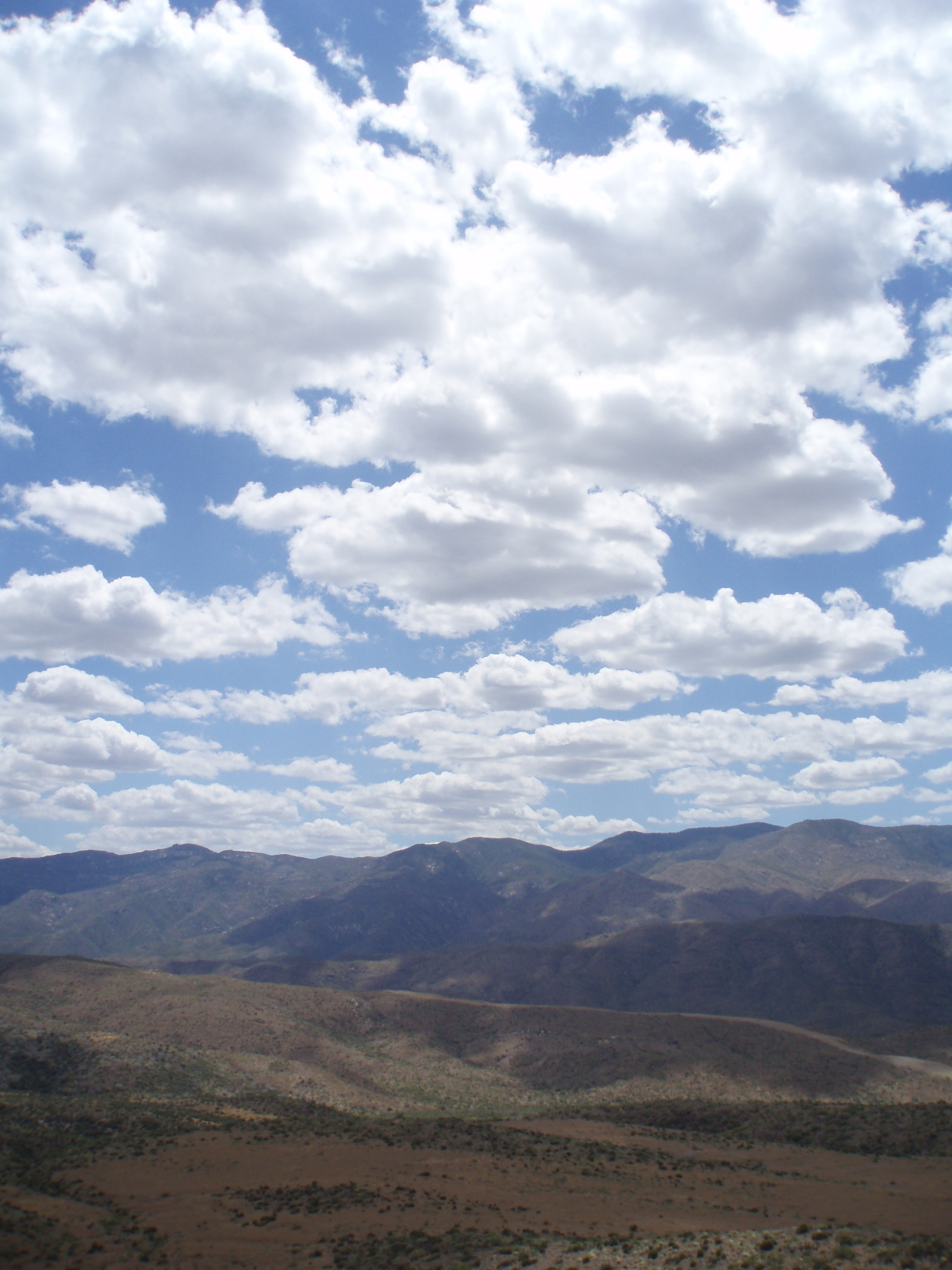
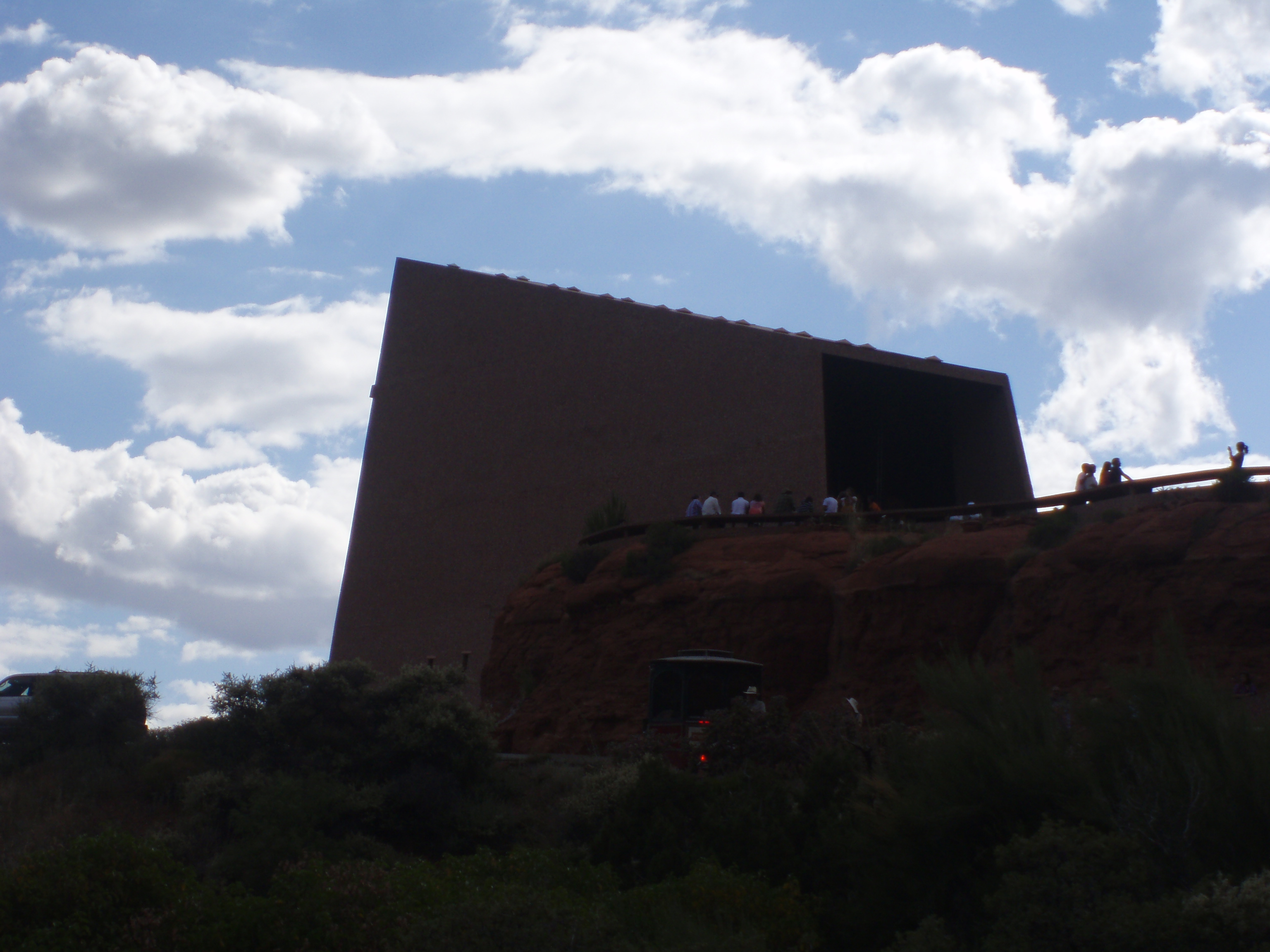
Yesterday, I came across these great shots of The Burren at Vintage Pages. I was reminded of Buzz Aldrin’s description of the “magnificent desolation” he witnessed on the Moon, and of Joan Didion’s essay “At the Dam.” I was also reminded of my own experience in Sedona, Arizona last summer, and I thought I’d share this piece about sacred space, published previously on Huffington. I wrote this months before I’d read Didion’s fantastic work, but well after I’d heard Aldrin talk about his own.#
What Is Sacred Space?
The Chapel of the Holy Cross rises from a 250-foot abutment in Sedona’s ferric sandstone, a sort of redundant decoration in this part of Arizona where I-17 and the Red Rock Scenic Byway seem to follow God’s own early steps across the Earth. Out here in the desert, among the great open tables of a vast, imposing communion, the idea of sacral man-made space registers in the viscerally absurd, feels essentially and obviously offensive. From the road, the innate need our species has to seek the holy seems corrupted by the building’s hubris, its imperial theology, by the categories and catechisms that value the work of fervent hands above the sublime, enduring witness of 300-million years. As my friend Jeremy and I park our rental car below the chapel’s massive cross, so meager in this scheme of things, we confess our doubts.
We’d set out on a slow course from Phoenix after breakfast. As I-17 wended north and east through desert, brush, and forest, we considered the physical reality of everything we saw in relation to the mountains we know so well back home in Pennsylvania, the trees that cover them, the interloping cities and still-interloping suburbs that never suggest this expanse of material, the planet’s bones, an endless stretch of at-rest atoms testifying for the universe. At home there are no resources unturned; limestone and slate and iron-ore are subdued and spent, the mountains are worn-down by glaciers, time, and strip-mines. I know next to nothing about the natural or industrial history of Arizona, but from the highway I am happy to believe that the stones and dirt and desert floor lie just as they rose from dry seas and tectonics. From the highway, that so much matter rests within my sightline reassures me: reality is big, our theologies are small, we must go about sincerely rendered spiritual pursuits with a humility that mimics in its depth the vastness of creation. We have a truly cosmic space in which to seek and find the holy.
Our first views of the Chapel are from the distance after three hours of roadside spiritual formation. We decide before we ever see it that we’ll have missed nothing if we don’t. We snake through the Red Rock Scenic Byway towards the Chapel’s foot fomenting reservations. Out of the car, where the rocks can hear us, we say we don’t know why people do this and that then again we do. We ascend the looping road to the Chapel’s entrance, hoping to recover the better reasons humans build religious things: from the need to offer, from the need to commemorate the places they encounter God. Still, the red rocks, the desert mountains and Arizona forests, the dirt and stone and binding heat aren’t going anywhere; the massive dome we’re under can’t be soon forgotten. But we move toward the redundant space, moved perhaps by our investment in tradition, by a certain empathy for what William Faulkner’s Jason Compson Sr. calls “that aptitude and eagerness … for complete mystical acceptance of immolated sticks and stones.” In this temple of the open air, we move to see what, if anything, might move us in a church.
From the outside foyer-summit, the vistas are impressive, just as they are from any point for miles. Inside, the central cross doubles as the altar’s focal point through the Chapel’s glass facade. I am struck by the sanctuary’s stark simplicity: the space is small, the stone walls are unadorned save two crafted rugs each depicting a nondescript apostle. The Stations of the Cross are Roman numerals formed from crucifixion-style nails (they look like railroad spikes); the altar’s ornaments are modern lines and shapes, all unassuming. Though the chapel’s founder, Marguerite Bruswig Staude, meant for its contemporary 1950s design to contextualize the liturgy of building in “a monument to faith…a spiritual fortress so charged with God, that it spurs man’s spirit godward,” I am struck by how underwhelming it is in its setting.
From outside, the Chapel of the Holy Cross is vain decoration, but in the sanctuary I am confronted by the futility that the simple space suggests. The immolated sticks and stones remain as meaningless as ever, but they enshrine in Sedona a natural counterpoint to the majesty that dwarfs them. The Chapel is an iconography of resignation, yes, but not of a surrender to despair. The spare walls and rough metal of the church confirm the higher teaching of geology: in the bare face of cosmic bigness, we might celebrate the room our smallness gives to seek. We might be moved by the fleeting crudeness of our best gifts to consider how deep and wide the holy, how ancient our environs, how vast and long the trek of matter into meaning. How blessed we are in smallness, how godward might we move.
Stuart Murdoch, a musical and lyrical hero of mine, becomes Stuart Murdoch, blogging hero.
A collection of blogs, you say? By a musician? An indie musican? Hmmmm. How interesting is that going to be? Well, quite interesting indeed, it turns out. You may already know Stuart Murdoch as the formerly-publicity-shy frontman of Belle & Sebastian. They were the band who swiftly amassed an army of fans in the late 90s, becoming key players in the indiepop movement in the process. Then they won a Brit award and changed tactics (sort of). If … Read More
Usually they’re tales of (or love letters to) girls lost in the confusion of adolescence or young adulthood, struggling to come to terms with their place in the world. Fumbled, forgettable sex is a repeated theme, as is identity crisis and the same sort of frustrated teenage ennui that Daniel Clowes depicted so well in his Ghost Worldseries. It’s existentialism through fiction, allowing his characters to project his worries and fears that maybe this life isn’t all we want it to be. His blogs, on the other hand, are much more confident. Murdoch still tells stories, of course, varying from taking pictures for Belle & Sebastian album sleeves to his opinions on the Olympics. But this time, he’s the focal point. And he turns out to be much funnier and more confident than you might have imagined. That’s not to say that he’s arrogant; he’s still self-deprecating at times, but it comes from a man much more comfortable with his own sense of self than his lyrics would suggest…
Where's your shady-looking likness, Mr. Hudson? It's not a doll! It's an AXTION FIGURE!
Because you demanded it, and because he can deconstruct the the dystopian visions of George Orwell with one half of of his hefty brain and Sheryl Crow with the other, The Daily Cocca is proud to present a new guest post from our good friend, Jay “Mr. Thursday Morning” Trucker! When not singing Journey songs in biker bars, Jay teaches, writes, and composes hilarious Facebook update statuses as if twitter never happened. Please do join me in welcoming him back the program. -Ed.
Axl Rose, Marketing Genius by Jay Trucker, The Daily Cocca
In 1994, Aerosmith and Guns N’ Roses were in the latter stages of their relevance. G N’ R were still releasing videos from the Illusions albums and putting out a record of covers, and Aerosmith continued their late 80s renaissance into a second decade with 7x platinum Get A Grip. Meanwhile, I was a young lad still anxiously awaiting the growth spurt that would forever prove elusive. It wasn’t exactly cool to love these unabashed rock stars while my fellow fourteen-year-olds were mourning the death of Kurt Cobain and pondering the fate of his mopey peers like Eddie Vedder, but I was steadfast.
Here is an exhaustive list of things I was sure of in 1994:
I would never understand women
I would always love Guns ‘n’ Roses
I would always love Aerosmith.
Two out of three ain’t bad, kid. You see, while Aerosmith may have had a more productive couple of decades (if we take the word “productive” to refer to an organism, institution, or collective that produces things), Axl’s sociopathic and often bizarrely reclusive behavior has allowed the Guns name to age in a much more respectable way than has brand Aerosmith.
For the unitiated, here is a brief timeline for the original lineups of both bands since ’94:
Guns N’ Roses
Aerosmith
1994: Release “Sympathy for the Devil” single; Slash calls this “the sound of a band breaking up”
1994: Release greatest hits album Big Ones, make boatloads of cash
1996: Break up
1997: Release Nine Lives, which includes lame double entrende single “Pink”
1998: Release “Don’t Wanna Miss A Thing” on Armageddon soundtrack [rock credibility exits stage left]
2001: Perform at Superbowl XXXV with Britney Spears, N’Sync
2001: Release Just Push Play, world shrugs
2002: Release Oh, Yeah, greatest hits double disc, make boatloads of cash
2004: Release blues cover album Honkin’ On Bobo. Global reaction: “eh”
2006: Release aptly titled greatest hits album Devil’s Got a New Disguise, make boatloads of cash
2010: Egyptian President Mubarak: “I will step down if Aerosmith threatens to release another album”
While Aerosmith has toured nearly every year during the last fifteen years, Axl’s bizarro Guns has only executed a single successful tour of the U.S., in 2006. While touring, Aerosmith has enthusiastically shilled for the latest repackaging of their greatest hits album. As the above list indicates, Aerosmith has released more greatest hits records than records of new material during this period, which is probably at least in part due to their recognizing that no one needs to hear a new Glenn Ballard-written Aerosmith record. Unfortunately, as the recent regime change in Egypt would indicate, Aerosmith is, in fact, planning to release their first record of new material in a decade sometime this year.
Later, Jay would wonder if the relationship between his love of G N' R and his inablity to understand women wasn't, in fact, causual.
Chinese Democracy was released four and a half years after the suit.
Who ever thought Eddie Vedder would grow up to be Jeff Bridges? Talk about a late bloomer. By the transivite property of Lebowski couture, you're still totally rad, Edward.
Herein lies the Genius of W. Axl Rose, nonmusical edition. Guns N’ Roses is not one of those punk rock bands destined to keep the same sound and tour every couple of years with only their graying hairs and protruding stomachs demarcating the passage of time. I mean, they’re not the Circle Jerks. They’re freaking Guns N’ Roses. They were making videos with dolphins and supermodels set to soaring piano arrangments while the “cool” thing to do was stare at your shoes while whispering verses and shouting choruses.
G N’ R comes from the “bigger is better” rock ideal, not the punk/grunge “less is more” aesthetic. In this way, they are a lot like Aerosmith. Thus, had they remained in the spotlight, they could have easily traded on their hard rock past, put out a few radio friendly shmaltz ballads, retooled a greatest hits package every few years, and made oodles of cash with deteriorating performances at amphitheaters and arenas year-round. In other words, they could have become Aerosmith or, even worse, Motley Crue.
yes, Jay. But you're forgetting that after G N' R broke up, Slash actually ended up with the Steelers for a time via the contraction draft of '96.
In fact, in the hands of lesser, more top-hatted hands, Guns would have no doubt become the same self-parodying pantomime of themselves that Aerosmith and the Crue are today. Slash has sold his likeness to so many lame-rod pop musicians and video games, even he can’t keep count. But when he gutted the last bits of his reputation on stage with the Black Eyed Peas this year, I couldn’t help but think back to Aerosmith’s nauseating 2001 Super Bowl performance, when they shared the stage with rock ‘n’ roll titans Britney Spears and N ‘Sync.
As Slash tried desperately to strike a cool rock pose next to an awkwardly gyrating Fergie, I thought to myself, that could have been all of G N’ R up there wearing Light Bright outfits and standing next to will.i.am, Fergie, and the other two dudes.
That could have been Axl, Duff, and company singing a country song to one of their re-claimed daughters on the soundtrack to one of the worst Ben Affleck moves of all time.
That could have been G N’ R singing goofball pop songs about women’s private parts.
That could have been Axl judging sixteen-year-old singers on a past-its-prime TV karaoke contest.
But for the grace of God.
Instead, Axl, who long ago bought out the Guns name, has guarded it like a rich guy guarding his mansion from a forest fire. The musicians he has chosen to work with recently have names like Buckethead and Bumblefoot. They may play the same songs as classic Guns, but no one will mistake them for Slash and Duff clones. And with the exception of a 2002 VMA gaffe, in which a bloaty Axl huffed around Radio City while a giddy Jimmy Fallon and the world gasped in horror, Axl has avoided the spotlight like the plague. When he finally put out Chinese Democracy after a seventeen year wait, Axl unilaterally decided his record company wasn’t supporting the album enough. He has subsequently avoided all efforts to promote it himself, including all state-side interview requests and tours. Does that suck for fans? Maybe, but what hurts more, the lack of Axl or the embarrassing omnipresence of Steve Tyler and Slash?
In keeping his and the band’s profile low key and touring only very sporadically with a cast of characters who look like aliens, Axl has accomplished what only former nemesis Kurt Cobain has similarly been able to achieve When most people think of G N’ R today, they think of G N’ R no later than 1994. Axl has divorced himself and his band from Slash, who defaces only himself when he parades around picking up contract work like a poor guy in a Slash costume. Today’s Guns are something different. They are a protooled, faceless entity with an enigmatic lead singer. G N’ R today are to classic G N’ R what the Foo Fighters are to Nirvana. They sprung from Guns N’ Roses, but they cannot damage the iconic stature of classic Guns any more than a Foo Fighters record can hurt the lasting reputation of Nirvana.
And Axl didn’t even have to die to keep his reputation in tact.
Postscript: I thought this blog fitting for my esteemed former co-dj’s domain because of our shared love of all things Axl. I wouldn’t defend his choice in Long Island-bred, Lehigh Valley-loving rock pianists with the same fervor.
Also, in 2001, I wrote an essay about Axl Rose, The American Icon, for my ENGL 200 Advanced Expository Writing class. It was, admittedly, not my best work. So if you’re out there, Prof. Martinez, I would like to resubmit my essay. Sorry it’s 10 years late.
Jay Trucker teaches writing at the Community College of Baltimore County and studies Sociology and Education at the University of Maryland Baltimore County. He occasionally writes about the Baltimore Orioles for WNST.net and nightlife for the Baltimore Sun blogs.













 Chris Cocca