Heroes and Villains: Brian Wilson, Donald Trump

I just watched the 2008 Kennedy Center Honors for Brian Wilson. For reasons that are easy to guess — his life story, his genius, his music — I am sobbing.  For other things, too: for him, for us; in gratitude, in fear.

A decade later, neither the country nor the world look anything like they did even in the nadir of the Bush administration. 

Honoring Brian, Art Garfunkel said: “I love rock and roll.  It’s just so joyous and life affirming.  And this is a great moment for me to honor my colleague, a fountainhead of that joy, Brian Wilson. To me, rock and roll is our great American invention.  And the fact that you, Brian, are one of its architects makes me proud of who we are as a country.”  Garfunkel talked about Brian’s “California roots, which to me, always represented the kindness and sweetness of America.”  He called Brian Wilson “rock music’s gentlest revolutionary.”

A few days ago, I read a brilliant piece by writer Gerald Weaver about Donald Trump and the failure of language.

Our innocence, our sweetness, the basic goodness of the premise for this country is the promise of a nation held together not by blood or iron but by consensus on revolutionary claims about the dignity of all people.

I’m not stupid.  I know we have never actually lived up to those ideals.  For centuries, we have systemically disenfranchised our own people.  For decades, we have instigated proxy wars.  For decades, we have have encouraged every kind of inequality.

But we’ve also held onto hope.  We’ve also given a damn about what America is supposed to be and mean. 

Condemning the tear gassing of assylum-seaking migrants at the southern border this week, Beto O’Rourke said, “It should tell us something about her home country that a mother is willing to travel 2,000 miles with her 4-month-old son to come here. It should tell us something about our country that we only respond to this desperate need once she is at our border. So far, in this administration, that response has included taking kids from their parents, locking them up in cages, and now tear gassing them at the border.”

Now the news that Donald Trump is authorizing lethal force.

I think I was four when Geraldo Rivera opened Al Capone’s vault.  He opened something else on Fox News’ The Five (I do not watch it). 

“This tear gas choked me. We treat these people — these economic refugees — as if they’re zombies from ‘The Walking Dead.’ We arrested 42 people; eight of them were women with children. We have to deal with this problem humanely and with compassion. These are not invaders. Stop using these military analogies. This is absolutely painful to watch…We are a nation of immigrants. These are desperate people. They walked 2,000 miles. Why? Because they want to rape your daughter or steal your lunch? No. Because they want a job! . . . We suspend our humanity when it comes to this issue. And I fear that it is because they look different than the mainstream.”

Of course Greg Gutfeld cut him off when he pointed out that economic refugees are in many cases fleeing situations our own policies have helped create.  Of course Jesse Waters, Fox’s Chief of Smarm, looked exasperated.

Of course, tonight, I’m crying over Art Garfunkel and Brian Wilson and America.


When Clark Kent Quit the Daily Planet

“I was taught to believe you could use words to change the course of rivers — that even the darkest secrets would fall under the harsh light of the sun…But facts have been replaced by opinions. Information has been replaced by entertainment. Reporters have become stenographers. I can’t be the only one who’s sick of what passes for the news today.”

Clark Kent, 2012

Scott Lobdell wrote this characterization of America’s most famous reporter, published in the final weeks of the 2012 election.  Superman was speaking here as a progressive; this is not a right-wing screed about fake news.

The point holds though, perhaps now more than ever.  The White House would like to bar reporters who ask questions it doesn’t like, and refuses to condemn the killing of dissident journalists overseas. 

When nothing is true, not even our most basic social mores, I suppose all news can convincingly be cast as fake by people with a vested interest in doing so. 

Part of this is on us.  We have tolerated decades of spin, of being lied to repeatedly by people in power.  Long before Trump, we’d bemoan the truth that all leaders lie, even as we kept electing them.  We’ve been in co-dependent political relationships for the length of the media age.  

Remember when some people thought blogging would save us? Or social media? 

It turns out democracy only works if we participate beyond the bare minimum.  If you’re too busy, too tired, too overworked, too impoverished to be more involved, consider whether the systems that govern your life have made that less or more true.  Then vote accordingly.  That’s a start.


Joan Didion and Betty White

This is from some time ago (early 2015).

Last week, before I knew she was the new face of Celine (also, before I knew was Celine was), I shared Joan Didion’s “At the Dam.”  I was taught this essay, and I teach it.  Not because Joan Didion is fashionable at the moment, but because it’s really good.

Flavorwire’s Elisabeth Donnelly has an interesting piece up today trying to take the pulse of the growing Didion-as-icon trend.  Donnelly quotes Haley Mlotek in what feels like an especially prescient observation:

As she puts it, citing Joan Didion as your idol says that:

…we’re cool, that we’re educated, that if we are not young and white and slender and well-dressed and disaffected and sad and committed to the art of writing as an arduous and soul-sucking process that must be endured yet Instagrammed simultaneously, then we will be, at least, as close as possible to those identifiers even if it kills us.

Fair? True?

We’ve also been doing this with Leonard Cohen.  Citing him as your idol signals different things, but the desire to look back and hold up great talents in their later years is nothing new.  We do it, of course, with Betty White.  We probably would have done it with Bill Cosby.  I for one am not sure why we don’t do it with Dick Van Dyke or Marianne Faithful.

Head’s up: New York Magazine, a mere four hours ago, has issued a warning that loving Joan Didion is a trap.

Cornelia, Mulatto Slave

It’s mostly an Illinois thing, but there’s also an important Lehigh Valley connection.  I wrote about this a few years ago, but because I love Sufjan Stevens and hate injustice, I’ll tell you about it again:

Pulaski was a Polish noble and general who helped the American colonies win their independence from Great Britain by training and leading American soldiers throughout the Revolution.  Pulaski died from wounds sustained during the Siege of Savannah, and is remembered today as a proto-typical Polish-American hero in many Polish-American communities.  Though his holiday is mostly celebrated in Illinois, two years ago I discovered a connection between the Duke and the Lehigh Valley’s very own Bethlehem, PA.

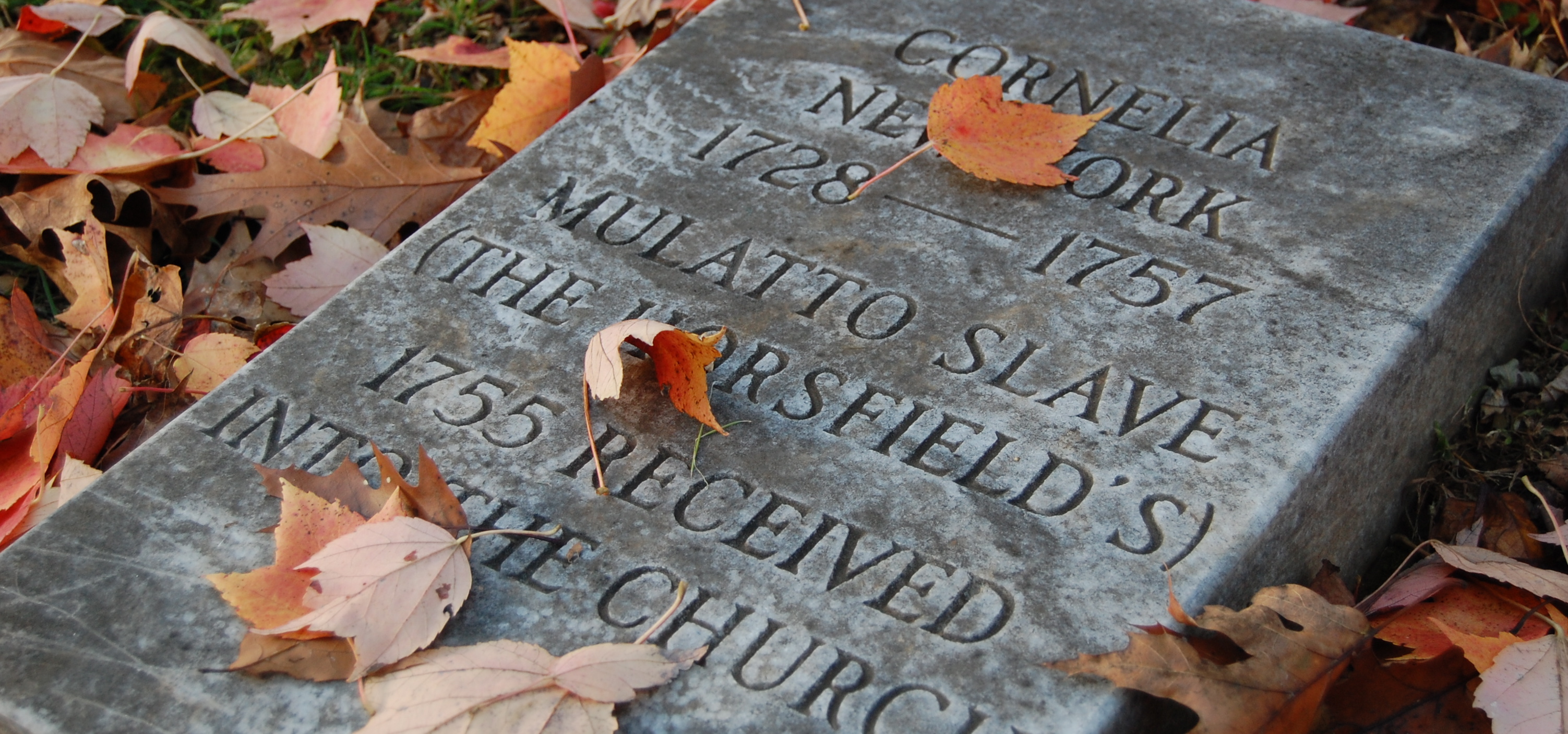
I was walking around the grounds of the old Moravian settlements in Bethlehem and come upon this grave in the historic Moravian Cemetery:

A few yards away, I found this historical marker, explaining Duke Pulaski’s role in defending the early settlement and the fact that women from the Moravian community created the war banner he carried into Savannah, an even later llionized by Henry Wadsworth Longfellow in Hymn of the Moravian Nuns of Bethlehem at the Consecration of Pulaski’s Banner.

Reconciling the image of pacifist Moravians sewing banners meant for war is one thing.  But Cornelia’s grave made me hot with rage and then it made me weep.

When I got home, I wrote the piece below.  You need to know that Bethlehem, PA, was founded by pacifist Moravians (who were fleeing religious persecution) in 1741 and christened for its namesake on Christmas Eve.

CORNELIA
NEW YORK
1728-1757
MULATTO SLAVE
(THE HORSFIELD’S)
1755 RECEIVED INTO THE CHURCH

What scandal, these Moravians, these Peace Church nuns and friars rending martial banners? Duke Pulaski, their protector, marches to Savannah, is recalled in Illinois among the Polish and in the frontier psalter for his sword. How ancient, their Count’s mission, in its context on the Lehigh, infant, pre-incarnate by their Christmas City’s namesake — Bethlehem, Palestine?

Cornelia, theirs in life, (the Horsfields’), not her own or God’s, sewn in Pennsylvania with the city’s founding mythos. December 24, 17whatever. Theirs in death, the Horsfields, these Peace Church nuns and friars.

Solidarity, Serendipity, Grace: a brief story from my morning

This is probably from 2013:

Yesterday I reposted a three-year old piece about Hess’s, the famed and sorely missed downtown commercial icon that owned the 20th century not just in Allentown but really across this part of Pennsylvania.

As you know if you live here, Allentown is undergoing half-a-billion dollars in new capital investment.

This morning, I had a breakfast get-together downtown. I was early, and I found myself sitting in the lobby of one of the new buildings to pass the time.  It also occurred to me to pray.  At some point, a kind woman I’d never met before who works somewhere in the building asked me if I wanted anything to eat or if I could use some coffee. Yesterday, I had given a little extra at a local coffee shop and said if you don’t want the tip, please do pass it on to a homeless friend in need.

The kind woman from this morning may have thought I was homeless or just simply hurting, and maybe that’s on her mind because of all the awareness being raised about the needs in Allentown. Maybe looking out for others is part of who she is.  In any case,  I’m grateful for her kindness and her courage, and I know that someday soon it will encounter someone with needs I can’t begin to imagine.  Maybe it has already.

Jesus, Toure, Theology, etc.

I can’t speak to the meat of this piece, and the piece it opposes, as it relates to post-blackness.

On the other hand, ethnographically, I do know something about the immigrant experiences of my own kin, and people like them, in the history of 20th century Americanization.  Clearly, I cannot (and have no reason to try to) equate the struggles of my brownish Italian ancestors, who came here in the figurative chains of the most extreme forms of European poverty, with the experience of black slaves and their (and their descendants’) struggle for community and freedom.  At the same time, it seems to me that the expatriate experiences of slave and immigrant narratives have in common what the writer at Liberator identifies as the longing of the expatriate community to retain ancient values that stand in sharp contrast to the political and economic machinery of the America they were sold on or sold to.  In these ways, post-blackness might be something like what classically poor and marginally white ethnic communities have long mourned in their third, fourth, and fifth generations.  I know something about that.  These experiences are far from identical.  But for the vowels in my last name, which are changeable, and the radical values, which are not, I could blend into the WASP elite largely unnoticed.  Color, and, I take it, blackness, is something different and has been something different since the beginning.

As a white man with an ethnic memory and as a follower of the radical called Jesus, I’ve thought a lot about what’s being said in the Liberator piece about the possibility and necessity of maintaining cultures and communities that stand in opposition to the neo-liberal or libertarian modes of capitalism destroying our poor (increasingly more of us) and our planet.  The instinctive drive of expat communities to retain their cultures and values is not unlike a religious witness:  we can and do oppose you forces of injustice that seek to rend our families, exhaust our world, and feed us, all of us, like so much fodder to the socioeconomicpolitical array.

There’s a saying, which I think goes back to James Cone, that “all theology is black theology.”  These are reasons why.  In the American context, black people are and always have been the most marginalized of expatriated groups.  If Jesus is for the margin, and if, by God, Jesus is what the early first-century hymn says:

Who, being in very nature God,
did not consider equality with God something to be used to his own advantage;
rather, he made himself nothing
by taking the very nature of a servant,
being made in human likeness.
And being found in appearance as a man,
he humbled himself
by becoming obedient to death—
even death on a cross!

and if those who follow are to use this model as a basis for treating each other with this same mindset (Philippians 2:5), then we must follow Jesus into quintessential Otherness vis a vie the power structures of our day.  In a figurative way, Jesus followers of every background must be made cruciform.  Is it too much to say we must all retain a kind of blackness?

In my own ethnic context, Robert Orsi notes that “Vecoli has portrayed Italians as fierce anti-clericals, angry at the church and looking for leadership to the radical political thinkers who emigrated with them and took up residence in the Italian colonies [in American cities].”

The important part of this quote, for me, is the alignment of Italian American immigrants with the radical political thinkers expatriating with them, and their penchant for living their spiritualities in the home and in street.  In The Madonna of 115th Street, Orsi shows the political/spiritual unit of the the domus (the family, the home life), standing in contrast to the demands of a newly industrialized West and in American urban settings.  Our cities were and are rife with abject urban poverty, an experience made even harder to bear by the grim contrast it bore against the comparatively wistful graces of abject rural poverty in Southern Italy: generational connections to domus, piazza, culture.   This is not to say that pre-Columbian or pre-industrial cultures were uniformly just and good (far from it) or that it was better to die of hunger in Campania than of a broken heart in Brooklyn.  It is to say, however, that in the rush to Americanize, my people have lost something vital, something ancient, and something that might serve as an alternative to the money-loving monoculture we’re relearning to resist.

All Christians must be expatriates.  All Christians must, like Christ, be immigrants.  This is what Paul means when he talks about being in but not of the worldy power structures.  This is no raptured absence from the realities of the the mess we’re in.  Instead, it’s a stubborn, radical insistence that there are other ways of doing things: black ways, Italian ways, Latino ways, Polish ways, Middle Eastern ways, Asian ways, and diverse seas within them.  There are Old World ways worth reexamining, the teachings of our ancestors — and the teachings of Our Lord — among them.

Richard Twiss Passes On

Richard Twiss died yesterday.

http://www.redletterchristians.org/we-miss-you-richard/

We Miss You Richard

More importantly, Richard in his own words, here.

I got Black Elk Speaks for Christmas and have been reading it sporadically, thinking of Richard and his larger work. I will do so more so now.  Godspeed, Richard.