Gary Carter’s Dapper Look, 1984

Congratulations, Giants.

Now that the Super Bowl is over, let’s focus on the real sports story of early February:

Pitchers and catchers report in less than two weeks.

To celebrate, I thought I’d share this great photo of the 1984 press conference welcoming catching great Gary Carter to the New York Mets.  I’m not a Mets fan, but I always liked Gary Carter.  He was a great player, and baseball fans everywhere are wishing and praying for him as he continues his fight against brain cancer.  Blessings, Gary!


(Photo via SI).


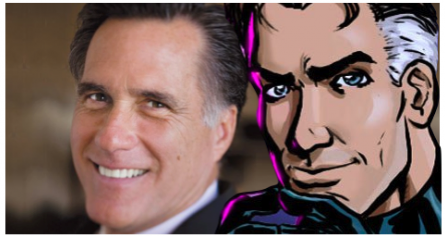
Mitt Romney Isn’t Reed Richards (But He Plays One On TV)

We were all over this back in June, but yes, Mitt Romney looks exactly like Reed Richards. I mention it now because because “Mitt Romney Reed Richards” has been a trending search term for the past few days.  In case you don’t know, this is why:

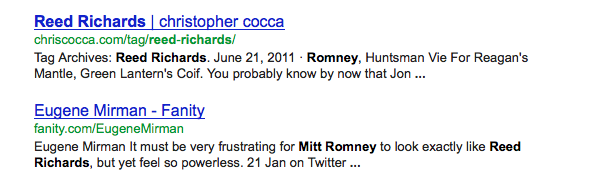
Also, The Daily Cocca comes up in tandem with a Eugene Mirman tweet on the Google Machine:

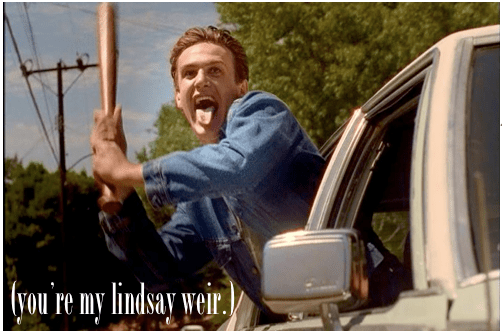
Eugene Mirman was one of the funniest comedians I ever saw on the old Conan show.  And he reminds us of this guy:


A New Reason to Not Kill the Rainforests: The Fungus I’m Calling Polyurethane Pam

The StumbleUpon algorithm took me from liking a chord sheet for “Hey Jude” to a story about a newly discovered Amazonian fungus that can eat polyurethane.  Coincidence, or does the algorithm like punning on Abbey Road tracks?

In any case, student researchers from Yale working in Ecuador have given us yet another reason to save the rainforests.

If you thought Fern Gully was propagandist tripe, read about the plastic-eating wunder-microbes here.  Plus one for biodiversity.


A Note About Class Warfare and the Earned Income Tax

When the powers that be saw urban cores diversifying racially in the 60s and said “here’s a good idea: lets move the hell out and take our EIT with us,”  that was class warfare.  And the poor have been losing ever since.

Bill O’Reilly addresses what he sees as the real problem with Mitt Romney’s “I’m not worried about the very poor” comment here, saying that the real causes of continued poverty are “poor education, addiction, irresponsible behavior and laziness. That’s right far-left people. Some folks are lazy.”

O’Reilly’s right, of course, that each of these things contribute to poverty.  But some of these things, like poor education, are systemic causes.  Saying “some folks are lazy” doesn’t square with calling laziness a systemic root of poverty.  That collapses into race-baiting buzzwords and O’Reilly knows better. That’s journalistic laziness, Bill, and you know it.  Maybe you’re making a Straussian meta-point here, but I doubt it.

That said, the failure of the Great Society is something we must wrestle with across the political spectrum.  Why has it failed? Why do our core cities have poorer educational systems than their suburban counterparts?  Why can a school in the City of Allentown be without books or year-round music education and a school a mile away in the suburbs have access to the finest of these things in spades?  And why, when we ask that question, are we called class warriors?

With regards to the Allentown Neighborhood Improvement Zone, we’ve been considering the historic fallout of situations that arose along with the Great Society:  the flight of capital from urban cores and the subsidizing of the suburbs that came with the decision to move Earned Income Tax out of the cities in which they were earned (cities whose infrastructures make that earning possible in the first place) and into the townships where they were used to build impressive schools and new neighborhoods for cents on the dollar when factoring in environmental and social externalities.

It’s no great wonder why the Great Society failed.  In the Allentown example, it failed by the State legislature’s design. It failed because any entitlement program without robust endemic opportunity creates dependency.  This is where Newt Gingrich is right in spite of himself.  And let’s make no mistake:  I’m not proposing some great apologia for the failed policies of Lyndon Baines Johnson.  From Vietnam to Camden, New Jersey, those speak for themselves.   There are many on the right who believe that systemic dependence on the welfare state was Johnson’s goal and remains the only true goal of most liberals.

I’ll say this:  I believe LBJ was probably one of the biggest racists to have occupied the White House in modern times.  I don’t think he cared about most people, let alone people that didn’t look like him.  I believe he was cynical enough and manipulative enough to believe that his policies would ensure black fidelity to the Democratic party for the “200 years” about which he is said to have boasted.  But I do not believe the Great Society is, on its own, the key to understanding the unsolved issues of poverty in this country.  Add things like capital flight and the movement of EITs from urban cores to cow pastures, and then we’re cooking.

Who’s to blame for the origins of our often racially charged class warfare?  Whatever you believe politically, you can’t honestly think it’s the poor.  You can’t honestly think it was African Americans who were moving to then-prosperous industrial cities for a piece of the opportunity they’d been promised since Lincoln.  If you do, you might be more beholden to ideology than to generative solutions.

Speaking of ideology, isn’t it a shame that, as the media and the ideologues have it, we have but two systems from which to form our political identities?  We’re either left or we’re right.  Oh, sure, maybe some of us are soft-left and soft-right, but really, the key to figuring all of this out lies in the talking points of one of our two bogus systems.  It’s almost as if someone, somewhere is making money from all this confusion and childish division.

If you’re like me, you’re too liberal and too conservative for either camp depending on the issue.  Good for you.  Not for being like me, but for not being people who insist on dividing us with labels and political rhetoric.  Meta-narratives be damned, because the truth is in the middle, and it’s far more interesting.  The future will not come from the front of the room, nor from the busted framing fables of either broken party.

It will come from us.
Dear Wealthy School Districts: It’s Not Your Money, Anyway (A Note About Non-Property Taxes and the Earned Income Tax in Our Cities)

Even if you don’t live in Allentown or the Lehigh Valley, if you’re interested in infrastructure, urban renewal, and stopping suburban sprawl (let’s call it “mall creep”), this post is for you.

As you might know, the former Philadelphia Phantoms are coming to Allentown.  The Phantoms are the top-level developmental affiliate of the Philadelphia Flyers, and their new arena is being built downtown as the centerpiece of what will ultimately be at least a $600 million dollar redevelopment project in the Queen City.   Honestly, redevelopment doesn’t begin to describe what the special tax zone (the Neighborhood Improvement Zone, NIZ for short) will mean for Allentown.  The NIZ, created by a bill in the PA legislature, does things that make relocation to the NIZ very attractive.  You can learn more about that here.

Something else the bill that created the NIZ does is return the Earned Income Tax of people who work in Allentown but don’t live there back to city to help fund the arena project. Some people don’t like that.  Some, maybe most, local municipalities are used to using EITs to help fund the suburban school districts they support.  Some people are starting to say “why should School District So and So pay for an Arena in Allentown?”

Those people miss the point.

For the last 47 years or so, Earned Income Tax in the Commonwealth has gone back to a worker’s home municipality instead of staying in the place where it was generated.  Before 1965, this wasn’t the case.  Before 1965 (read, before our core cities started failing), Earned Income Taxes stayed where they were made.  Pennsylvania legislators, keen on seeing farmland turned to suburbs, put a stop to that and the townships blossomed with stripmalls, blacktop, and sprawl.  Urban cores and urban schools were left to wither on the vine.

Now, the same school districts and municipalities that have benefited from this tax grab for close to 50 years are crying foul because EITs are going back where they belong. Heaven forbid the core cities and the near-broke school districts in them get a fair shake in 2012.

For shame, township people on the wrong side of this issue.   The Allentown School District can’t afford year-long art, music or gym classes, even at the elementary level.

Look, I know it’s easy to get used to privilege, and then to expect it.  But as Jon Geeting and others have been saying, the cost of living and doing business in the suburbs has been subsidized from the start.  This isn’t about a hypothetically free market dictating that setting up shop in low-density townships made more sense than continuing to develop walkable cities.  This is about, and always has been about, the myth of cheap suburban sprawl.  Sprawl came at a cost to our economies, our infrastructure, our environment, and our mental and physical health. It came at a cost to our cities, to be sure, and to our schools.

No one is building an urban arena with money that should be going to buy football pads for rich school districts.  No one is suggesting that we slash the budget of the Parkland High School closed-circuit television station so Spanish-speaking kids in Allentown can live in a city with a future.  Who would ever suggest something like that?

Allow me to paraphrase one person who actually might.  “Render onto Allentown what is Allentown’s.”

When You Get a Chance to Thank Someone, Take It: SOPA, Charlie Dent, and Me

Over the weekend, I had a chance to tell US Rep Charlie Dent of the PA-15th that I appreciated the way his Washington staff engaged me on the SOPA issue when I called.  I also thanked him for coming out against the bill.

Was the aide I spoke with the day Wikipedia went dark just doing her job?  No.  She was doing her job well.  The process was engaging, and given the number of calls that office surely had that day, it could have gone another way entirely.  I’m thankful that it didn’t.

Did Congressman Dent have to come out against SOPA?  Not really.  Even though the bill was dead in the water halfway through the day, or perhaps because the bill was dead, the Congressman didn’t have to comment one way or the other.  But he did, and I’m glad he did.  If I can take the time to call their offices and request a certain outcome, I should take the time to thank my elected officials for heeding the will of the people when I get the chance.

The politics here in PA-15, like the politics where you live, are complicated.  Here, we’re talking about redistricting, an NIZ, significant urban renewal, significant needs among the homeless, the working poor, and, yes, the middle class.  We’re also talking about significant opportunities.  Your communities are faced with some of the same challenges and rise-to-the-occasion kinds of moments.  Some won’t like that I’ve thanked Charlie Dent for anything, and others believe he’s the congressional candidate best positioned to help PA-15 through the change that’s coming.  That’s politics.  That’s people.  But I believe we’re called to civil discourse, and I believe that civil discourse begets itself, even as the smut that passes for political information propagates at dangerous angles.

Charlie Dent got SOPA right, and I’m glad I got to tell him so in person.  If that opens the door for more discussion about other pressing issues, all the better.  That’s all part of my job, and all part of yours.