When I have little to no clue what I’m doing here, in this life, with these dreams, and with my junk drawer of mismatched talents.
I just don’t get it.
My life at times seems to resemble that bag that Mary Poppins had- she just kept pulling things out here and there, things that didn’t seem to fit, things that may not have made sense, other things that were simply magical, yet they all served some purpose to her. What do you do with what you have when it doesn’t seem to fit together?
You throw it out there and you let the pieces lay where they fall. *
*Disclaimer: this is in no way foolproof.
This past year had been such a fun and incredible journey with The Adventure Projectand I have enjoyed every step of it. I knew that I would be part of typeTAPagain this…
Cool post from screenwriter Scott W. Smith. Scott shares a piece by Maureen Doud about 50s-starlet-turned-nun Dolores Hart, the subject of award-winning documentary “God Is The Bigger Elvis.” What a great and profound title!
“When I met Elvis, I met a very sweet and very courteous young man who jumped to his feet and said ‘Hello,’ and ‘ How do you do, Miss Dolores?’ I was very touched by his courtesy and honesty, and I thought immediately I would like this fellow.”
Dolores Hart
A spiritual documentary about a 73-year-old nun living in a rural Benedictine monastery/farm in Bethlehem, Connecticut might not seem like the easiest route to take to the Oscars, but it worked for God Is the Bigger Elvis—the story of former a Hollywood actress who once kissed Elvis Presley in a movie.
I am huge Oasis fan and an even bigger fan of Noel Gallagher, creative force. He’s been great on American late night TV this year promoting Noel Gallagher’s High Flying Birds, his first solo album since leaving Oasis amid great tumult in 2009.
While it’s true that Oasis never topped their first two albums critically or commercially in the US, there’s a lot to like in the catalog that came after (What’s The Story) Morning Glory?, starting with the 1998 b-side album The Master Plan. Ten years, a handful of great singles and some okay albums later, 2008’s Dig Out Your Soul came forth as the best Oasis album since 10th-grade English. (That said, I remain an unabashed, un-ironic fan of 1997’s Be Here Now.)
Earlier today, my best friend and Oasis-loving partner in all manner of existential creativity for the past 20 years (let’s call him Ramon) sent me a new piece from CNN.com: Noel Gallagher: ‘If Obama loses, I’ll run for president myself’. As Noel himself might say, “bloody brilliant.”
When I was a kid, the honesty and swagger Oasis presented felt like inside information. “We’re great and we know it. That’s all the really matters.” One of the best things about that attitude in the early days was that it was totally untested and undefended. There would have been no point. It’s an existential conviction, an ontological statement that resonated with the entire youngish population of the UK and a good chunk of us here. It came to us in the wake of Nirvana, in direct, deliberate contrast to sentiments like “I Hate Myself and Want To Die.” When I spent a few weeks in England the summer before Oasis released Morning Glory Stateside, Oasis’ grip on British culture was as inescapable as it was brazen, and it was something to behold. That fall, it took root in bits and pieces here, never reaching monoculture status for reasons the piece above gets into.
Still, all these years later, I find myself watching recent Noel interviews on YouTube when I can’t sleep or when I need a special kind of affirmation. I can’t bear to watch the old ones…I’ll get too nostalgic. The thing about Noel in his 40s is that the pomp and confidence is tempered (never dampened) by the facts of his successes. The brazen upstart is now a winsome statesman of the same old plucky mettle. It’s wonderful to see.
Also, this:
The thumbnail looks like Paul McCartney, but it’s Roger Daltry. In any case, it isn’t Noel.
Yesterday was Casimir Pulaski Day, which I know about because of the Sufjan Stevens song. Pulaski was a Polish noble and general who helped the American colonies win their independence from Great Britain by training and leading American soldiers throughout the Revolution. Pulaski died from wounds sustained during the Siege of Savannah, and is remembered today as a proto-typical Polish-American hero in many Polish-American communities. Though his holiday is mostly celebrated in Illinois, two years ago I discovered a connection between the Duke and the Lehigh Valley’s very own Bethlehem, PA.
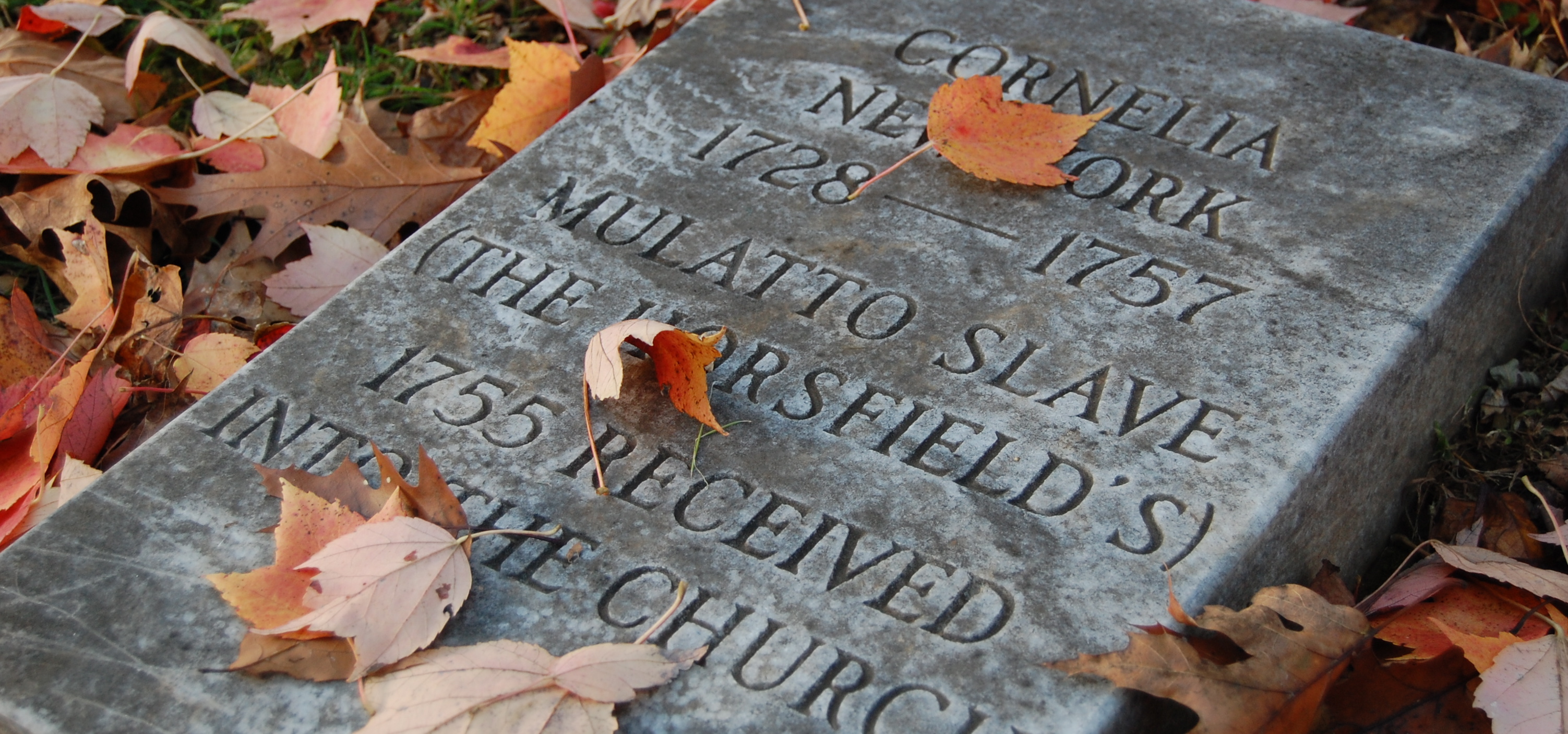
I was walking around the grounds of the old Moravian settlements in Bethlehem and come upon this grave in the historic Moravian Cemetery:
Reconciling the image of pacifist Moravians sewing banners meant for war is one thing. But Cornelia’s grave made me hot with rage and then it made me weep.
When I got home, I wrote the piece below. You need to know that Bethlehem, PA, was founded by pacifist Moravians (who were fleeing religious persecution) in 1741 and christened for its namesake on Christmas Eve.
CORNELIA
NEW YORK
1728-1757
MULATTO SLAVE
(THE HORSFIELD’S)
1755 RECEIVED INTO THE CHURCH
What scandal, these Moravians, these Peace Church nuns and friars rending martial banners? Duke Pulaski, their protector, marches to Savannah, is recalled in Illinois among the Polish and in the frontier psalter for his sword. How ancient, their Count’s mission, in its context on the Lehigh, infant, pre-incarnate by their Christmas City’s namesake — Bethlehem, Palestine?
Cornelia, theirs in life, (the Horsfields’), not her own or God’s, sewn in Pennsylvania with the city’s founding mythos. December 24, 17whatever. Theirs in death, the Horsfields, these Peace Church nuns and friars.
I spent most of the day working on a message inspired by 1 Corinthians 1:18- 25. In that passage, the apostle Paul says that the cross and the message it sends are foolishness to the self-styled wisdom of convention, but to those who “are being saved, it is the power of God.”
I’ve spent a lot of time thinking about the ways the life of Jesus bucked convention. His birth and upbringing, his passion, death, and resurrection. let alone his passion, death, and resurrection. Te irony, subversion, and poetry of Christ’s story is precisely what I find so compelling.
Last night, while I watched Skip Bayless and Stephen A. Smith throw down about the trade rumors swilring around Celtics point guard Rajon Rondo, I did a little reading up on lifelong Celtic forward Paul Pierce. It’s not often that professional athletes quote Mark Twain and Blaise Pascal on the front page of their website, but as Shaquille O’Neal will tell you, “Paul Pierce is the Truth.” As Pierce’s website reminds any nonbeliever: After a Lakers’ victory over the Celtics in 2001, O’Neal pulled a Boston reporter over and gestured toward his notepad:
“Take this down,” said O’Neal. “My name is Shaquille O’Neal and Paul Pierce is the [%*$&ing] truth. Quote me on that and don’t take nothing out. I knew he could play, but I didn’t know he could play like this. Paul Pierce is the truth.”
Compare that wit the first three verses of the apostle Paul’s letter to the Corinthians:
“Paul, called to be an apostle of Christ Jesus by the will of God, and our brother Sosthenes, to the church of God in Corinth, to those sanctified in Christ Jesus and called to be his holy people, together with all those everywhere who call on the name of our Lord Jesus Christ—their Lord and ours: Grace and peace to you from God our Father and the Lord Jesus Christ.”
My name is Paul and this is how it is with Jesus.
My name is Shaquille O’Neal and Paul Pierce is the truth.
Sometimes that’s how I feel about the poetry of Jesus’ story. Whatever else, that poetry’s the truth.
“Fiction is bound by possibility,” Pierce quotes Twain as saying, “the truth is not.” Pascal adds, “we know the truth not only by reason, but also with the heart.”
“Sometimes I can’t say the things I want to because it’s out of reach.
I am not able to say it, regardless of how hard I try. I stare blank
stares and feel like I have no mouth.Then the art in each of us starts
to speak through another. I hear it perfectly said and am satisfied,
relieved in a way, and when I hear it I laugh the laugh of bona fide
truth, obvious delight….It has taken me a half century to see we sing
the songs the other can’t sing – that we give each other the voice we
do not have of ourselves alone.”




 Chris Cocca