The Poetic Metaphysics of I, Thou, and It
I’m publishing this on Substack soon, but I thought I’d post it here as well. I’m interested in your thoughts.
I learned this poem from Book of Hours about 20 years ago. At the time, I think the last things I’d sat down and intentionally memorized were fourth-grade/1989 bangers “We Didn’t Start the Fire” and “Another Day in Paradise.” (Don’t underestimate their effect on my moral formation).
Here’s Rilke (Macy and Barrows translation):
We must not portray you in king’s robes,
you drifting mist that brought forth the morning.
Once again from the old paintboxes
we take the same gold for scepter and crown
that has disguised you through the ages.
Piously we produce our images of you
till they stand around you like a thousand walls.
And when our hearts would simply open,
our fervent hands hide you.
Book of Hours, I 4
This poem, written in 1899, is often called “God’s True Cloak.”
Reading it now, I notice some things I’ve slightly misremembered.
I thought the second stanza was:
or take again from old paintboxes
the same gold for scepter and crown
that have defined you through the ages.
In the first instance, I’d wrongly remembered a continued deontology (what we must not do); instead, Rilke is describing what we do (and shouldn’t).
I had also thought “stand around you like a thousand walls” was “stand before you like a thousand walls,” but around is definitely better. I’d be interested in what any German speakers or readers make of the original text.
What really strikes me this time, though, is the interplay of you/thou and that in the opening lines. God is referred to as a you/thou (a personal, immanent presence with agency) twice; you in king’s robes, you drifting mist; as well as that (a force) rather than whom. Again, I’m not sure how this reads in Rilke’s German, but, as presented, it’s an elegant compression of God as thou (a God who is someone)and God as that (that which does something; in this case, brings forth the morning, but, in a bigger sense, grounds all being).
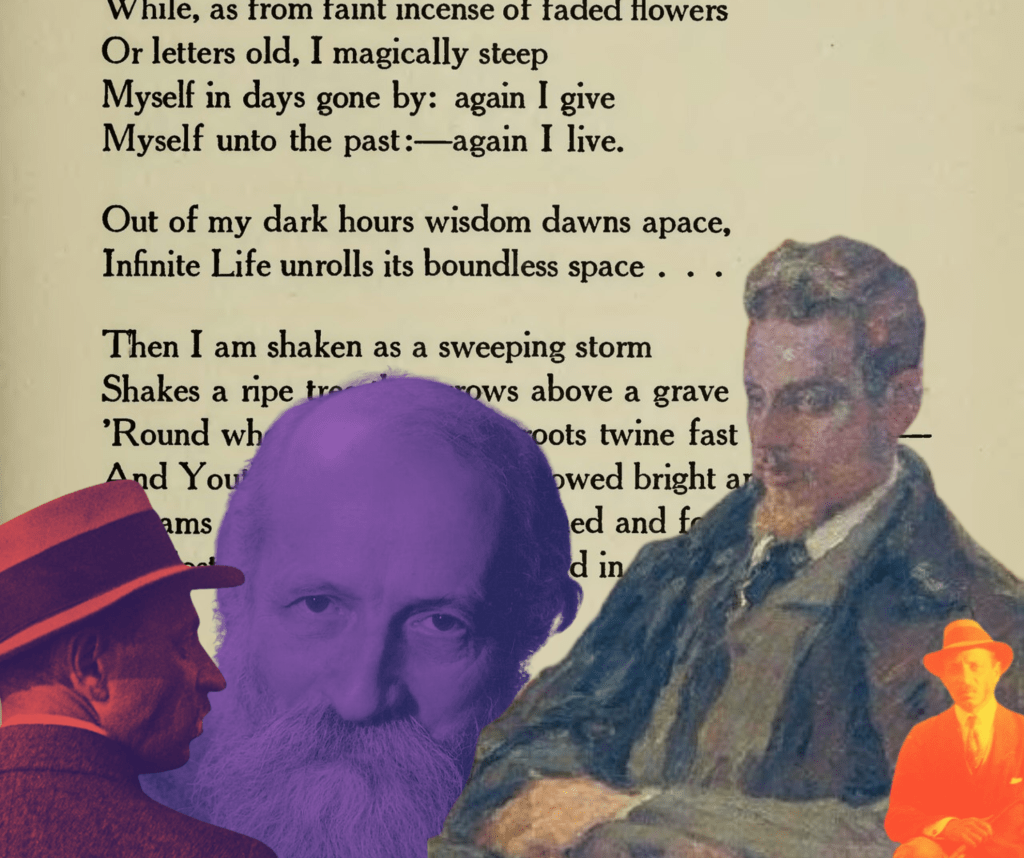
This brings us into conversation with Martin Buber. In I and Thou (Ich und Du, 1923, translated into English in 1937), Buber suggests that there are two primary lenses through which we process reality: I-It and I-Thou. I-It grounds and defines the self by difference from Other-as-object (I am Martin, that is a tree). I-Thou recognizes Other (even a tree) as presence and mutual foregrounding. For Buber, every move toward “You” is a move toward God, “the Eternal Thou.” Human life finds meaning through relationships (I-Thou) and grows more integrated in the move from seeing Other as It and understanding, experiencing, and affirming Other as Thou.
Buber certainly knew Rilke’s work and cited him elsewhere (though not, to my knowledge, in I and Thou). And while “God’s True Cloak” isn’t only about the I-Thou tension or the mystery of a God at once immanent and ontologically necessary, it does masterfully, beautifully — mystically — echo mystic traditions and anticipate key parts of Buber’s project.
Poetic brilliance is funny like that.
As for the cloak. It’s hard to not be reminded of the woman cured after touching Christ’s robe. Her instinct (“If I but touch his cloak, I will be made well”) suggests intuition: God is personal presence (walking dusty streets, wearing robes) and God grounds reality (the mist brings forth dawn, the ephemeral has power). Did she encounter the “hem of his garment” as Thou rather than It? For what it’s worth, he says her faith has healed her.
 Chris Cocca